Hairstyles & Beauty · Braids
Medium Boho Knotless Braids: The Complete Guide
Why medium-width boho knotless braids are the sweet spot between small and jumbo — install time, styling versatility, and care.
Updated 7 min read
Hairstyles & Beauty · Braids
Why medium-width boho knotless braids are the sweet spot between small and jumbo — install time, styling versatility, and care.
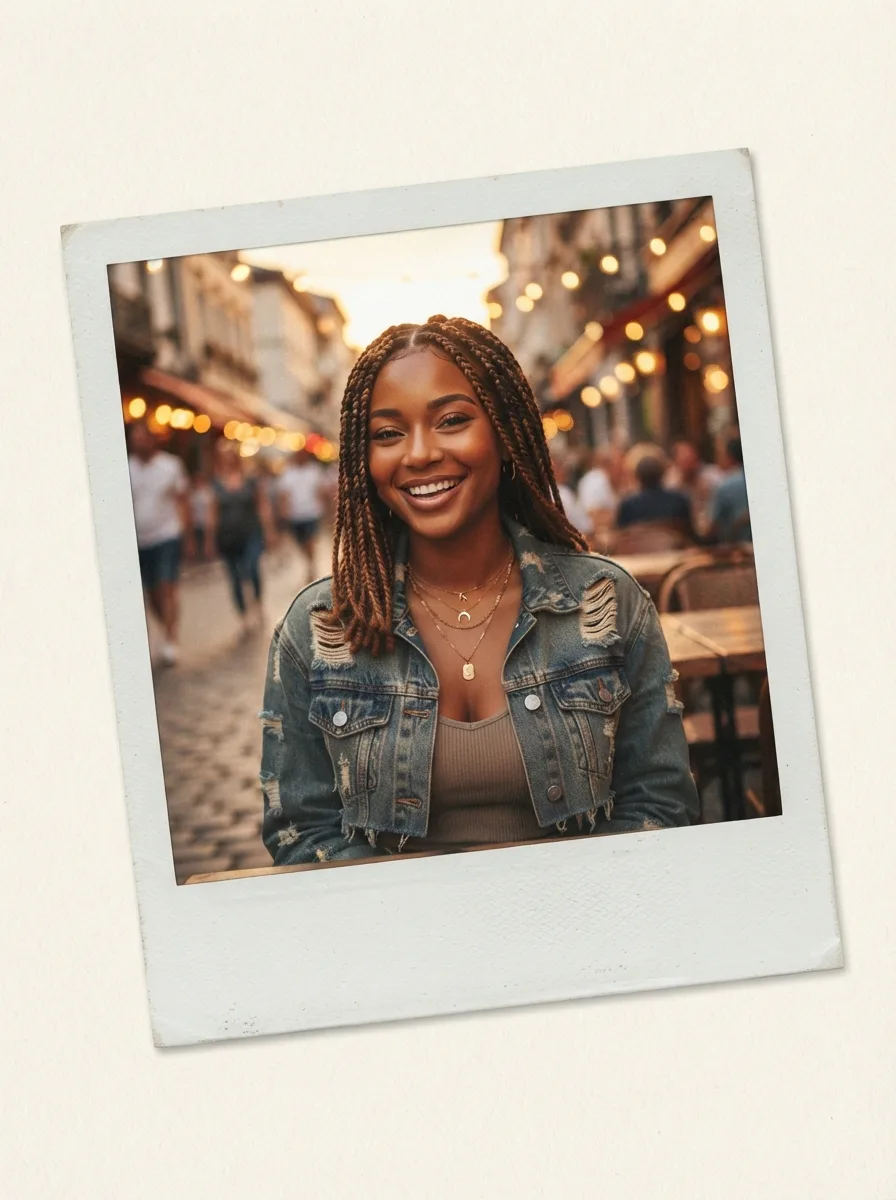
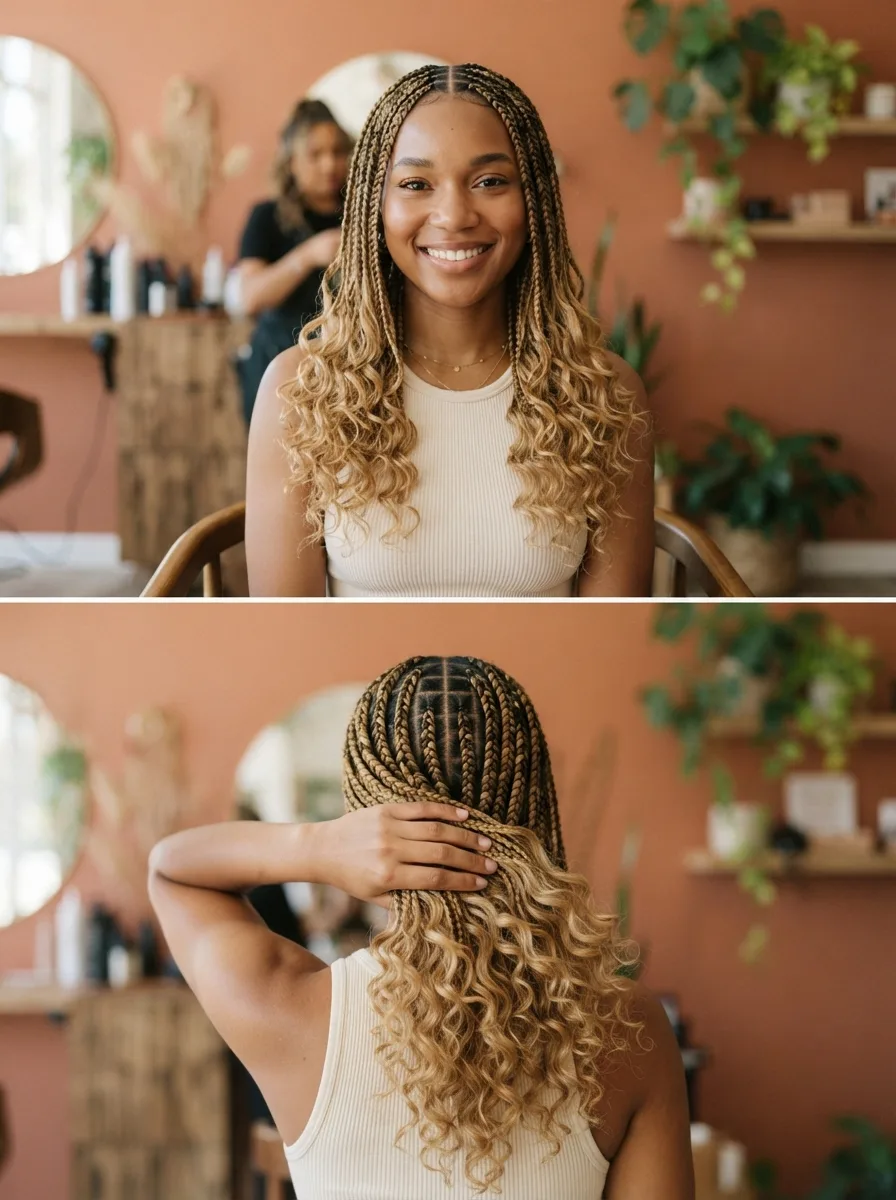
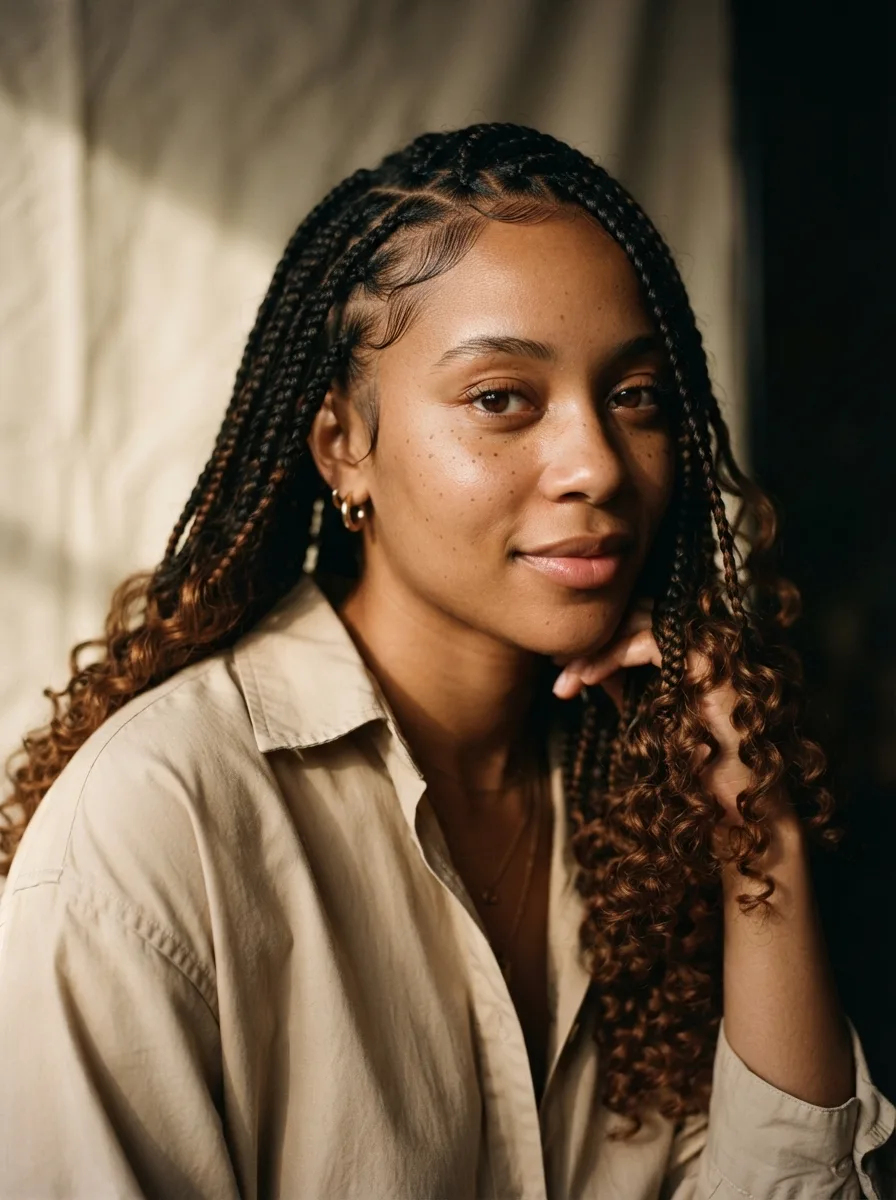
Ask for “boho knotless braids” without specifying a size and most braiders will default to medium — it’s the width that shows up most often in reference photos, and for good reason. Small braids look incredible but can mean a 7-hour appointment and a price tag to match. Jumbo braids are fast and affordable but read chunkier and limit your styling options. Medium sits in the middle: full enough to photograph well and hold a center part cleanly, light enough to wear comfortably through a full five-to-six-week cycle without feeling like a commitment. Here’s what actually changes when you size your knotless install to medium specifically.
Braid sizing isn’t standardized the way clothing sizes are — one braider’s medium can look close to another’s small. The most useful reference point is a straw: medium sections are roughly straw-width, noticeably thicker than the pencil-thin sections used for small braids, and noticeably thinner than the finger-width sections of a jumbo install.
Because the term is relative, the single most useful thing you can do at a consultation is bring a photo of medium-width braids specifically, not just “boho braids” generally — a braider reading a photo for section size gets you a much closer match than a verbal description does.
Braid count drives appointment length more than almost anything else, and section width is what determines braid count. A full head of small knotless braids can mean 200+ individual braids and a 7-plus-hour chair time; jumbo cuts that down to 60-80 braids and 2-4 hours. Medium lands in between, typically 100-140 braids and a 4-6 hour appointment — long enough to do properly, short enough to actually schedule around a normal day.
That shorter appointment also means less total tension time on your scalp, since the feed-in method already distributes tension along the braid rather than concentrating it at a root knot — medium width just gets you out of the chair before fatigue starts affecting how carefully the last few rows get parted.
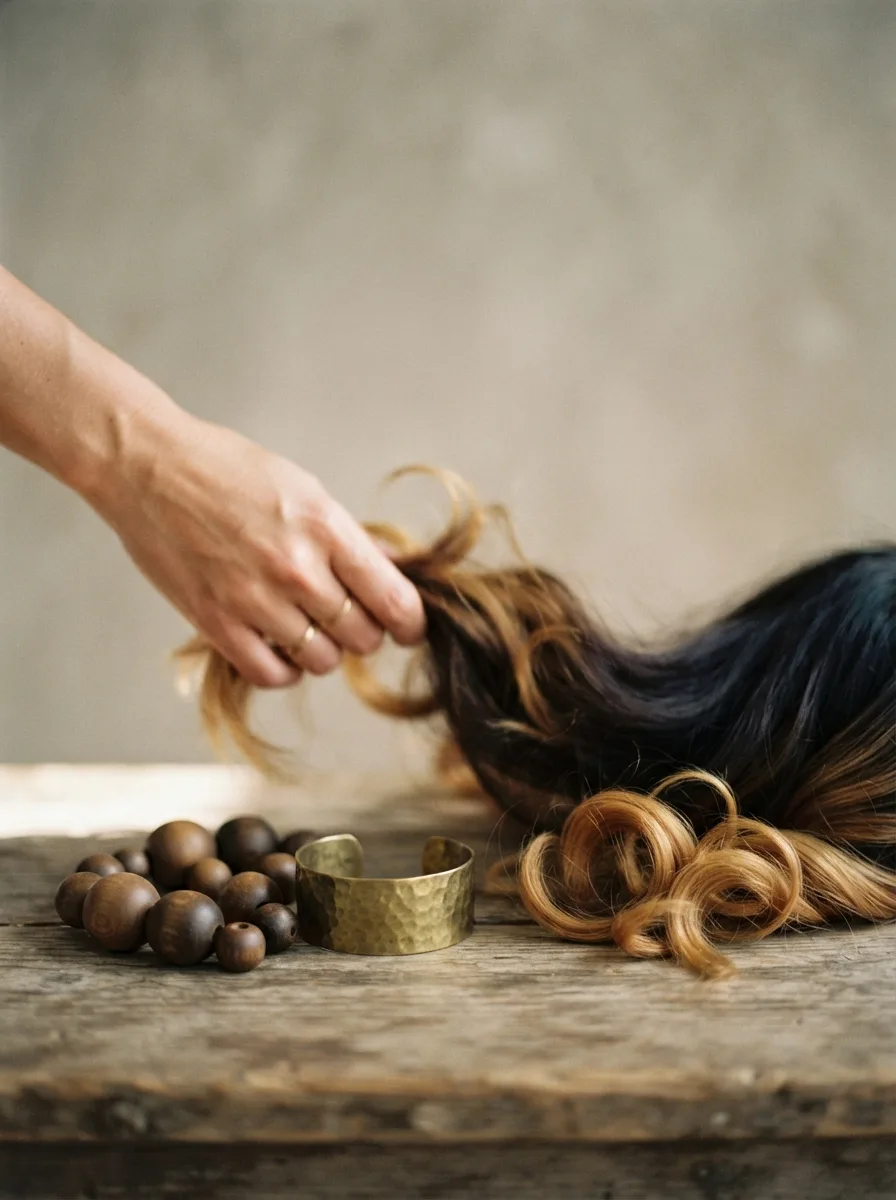
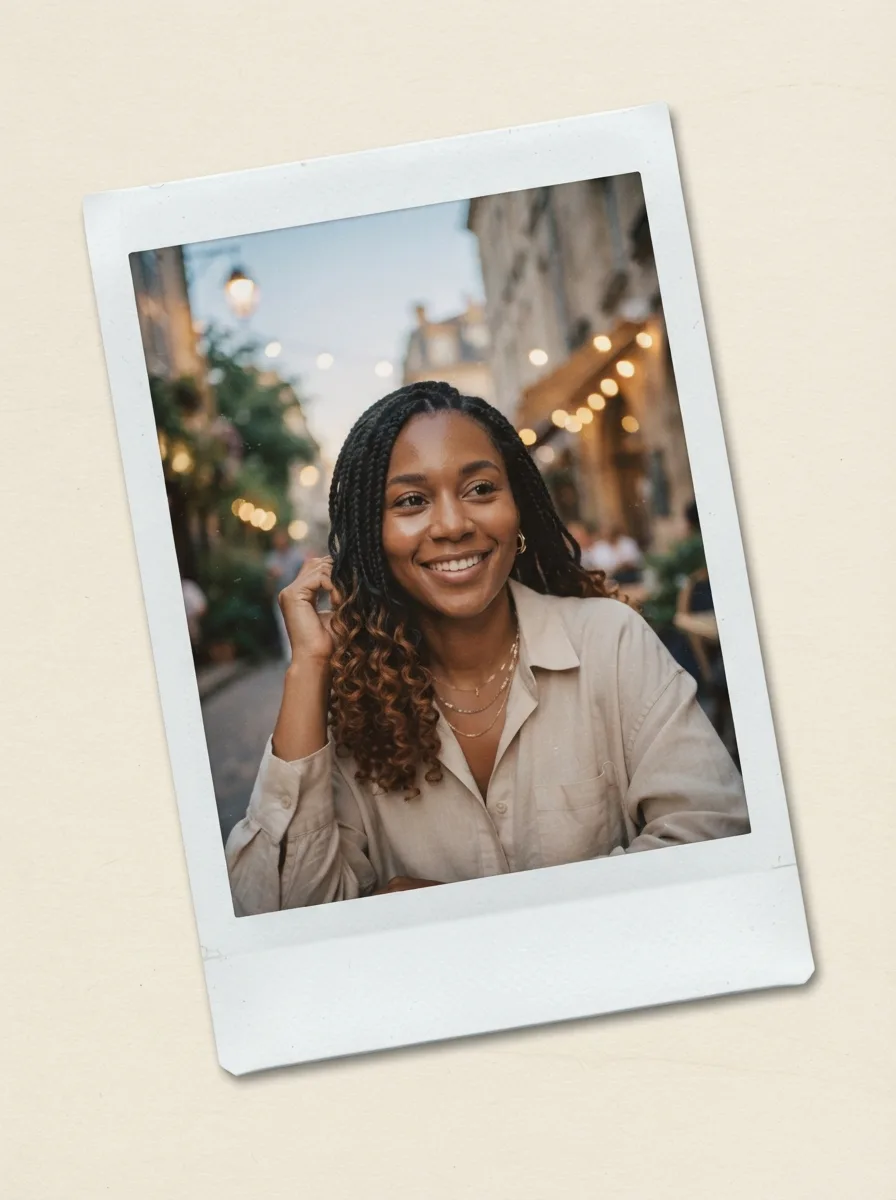
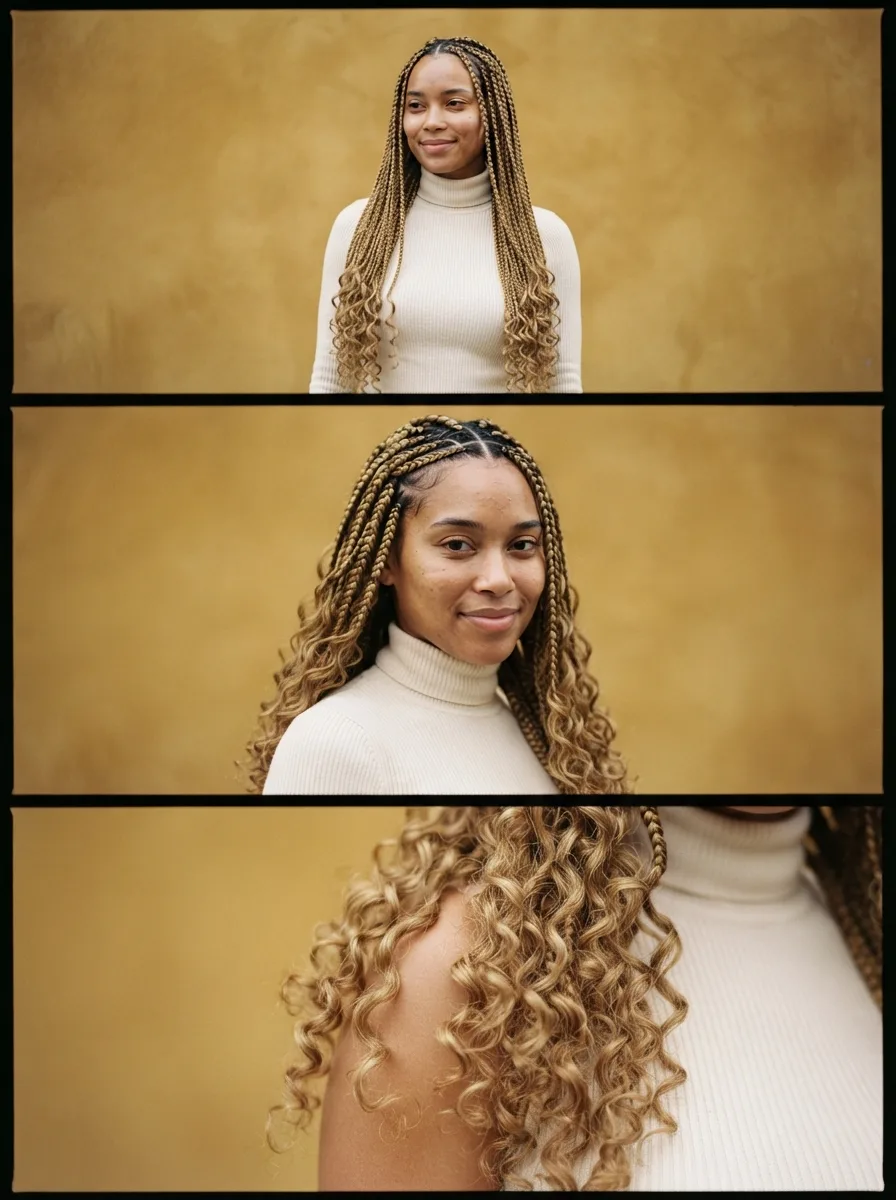
Section width changes how the curly boho accents actually look once they’re in. On a small braid, curly ends look proportionally large and can dominate the braid visually. On jumbo, the same curl pack can look sparse relative to the thick braid it’s attached to. Medium hits a natural proportion where the curl transition looks intentional rather than mismatched.
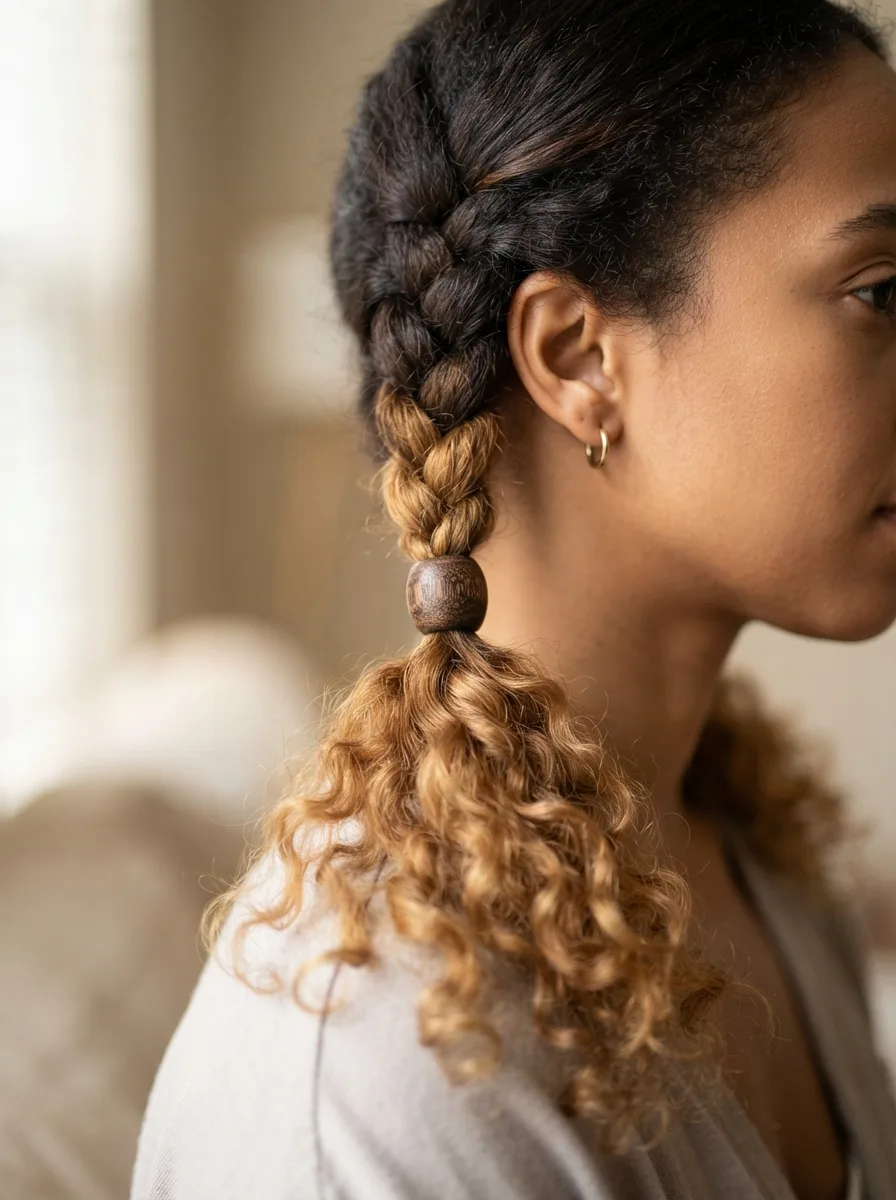
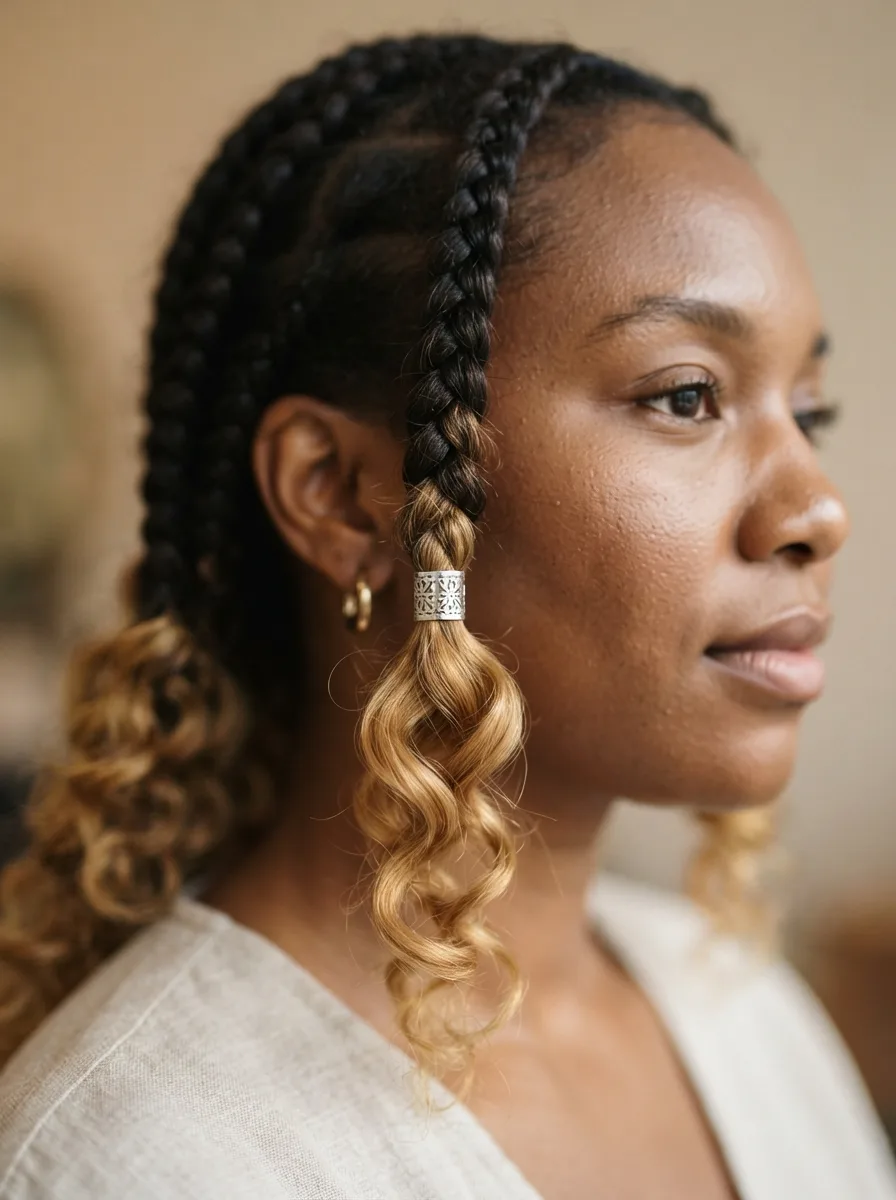
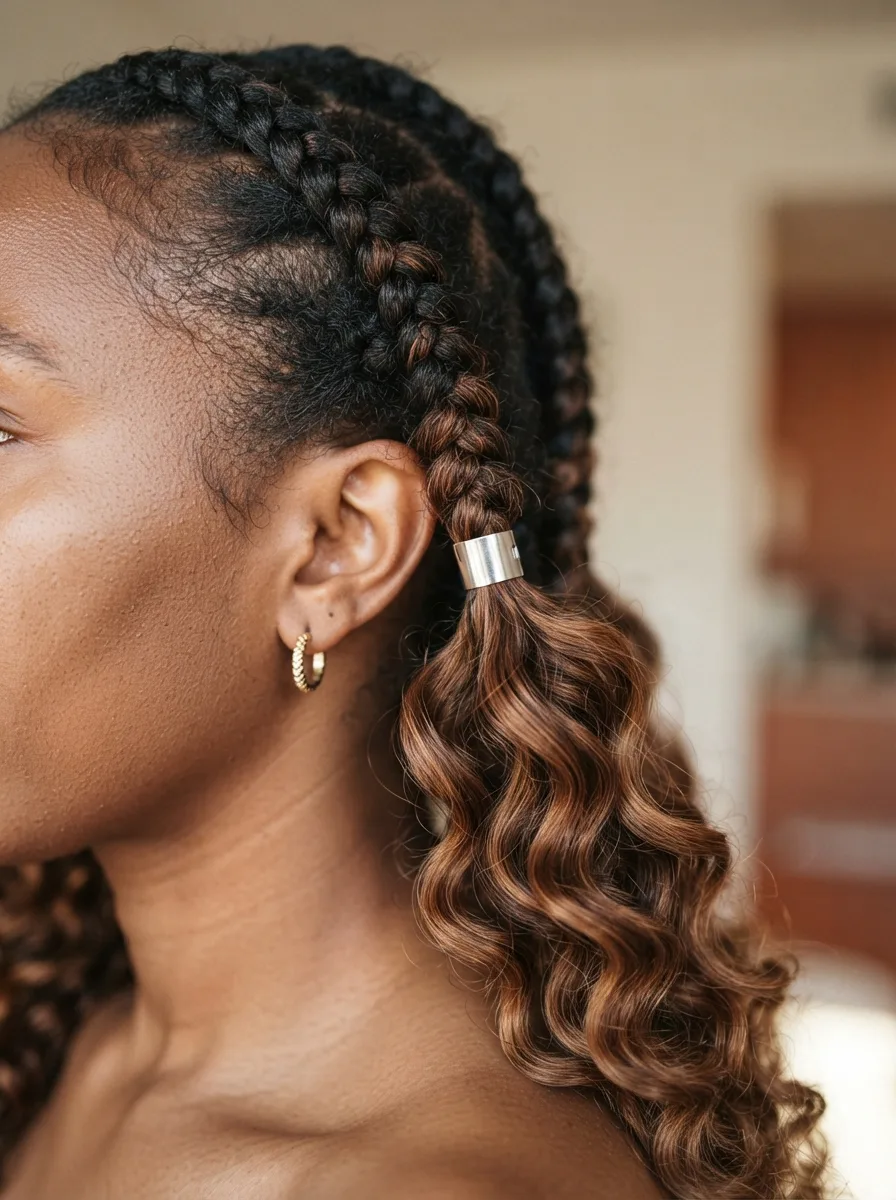
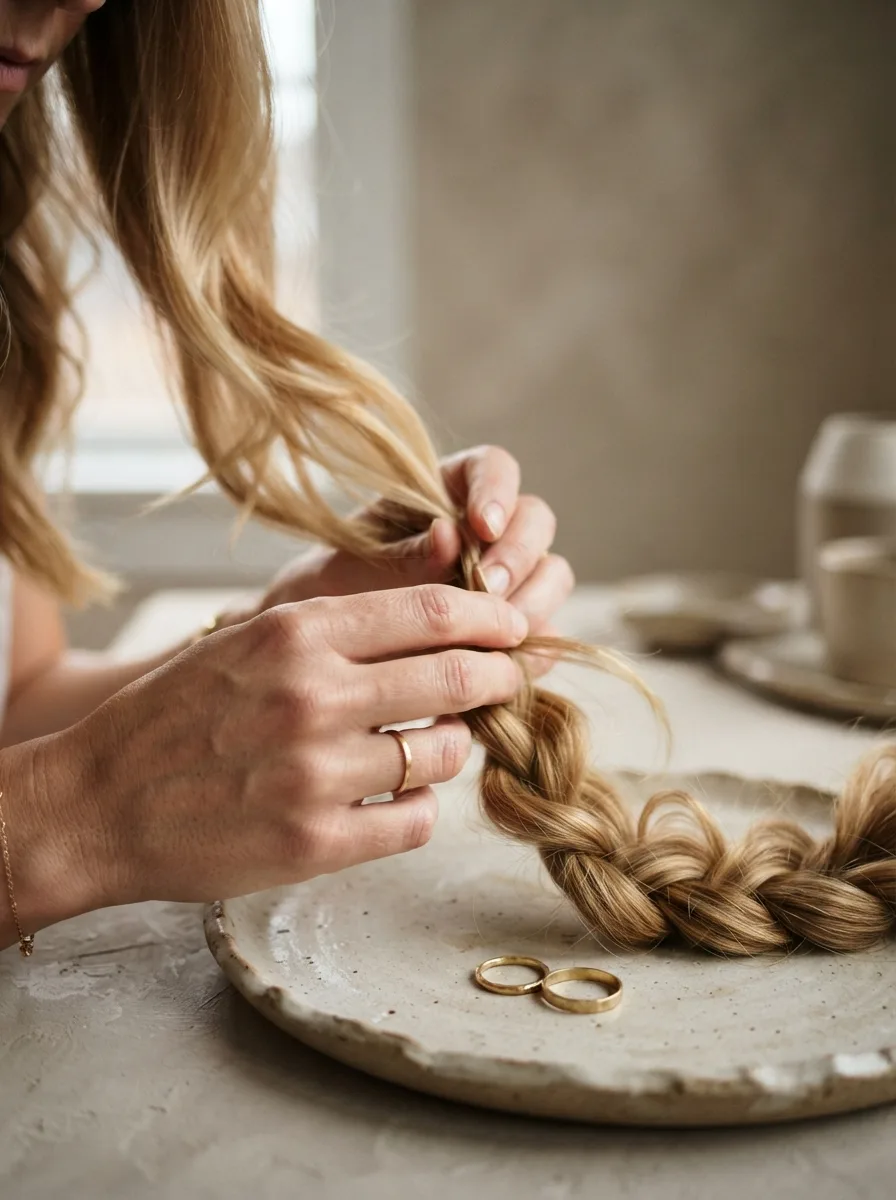
Accessories scale the same way. A brass ring or two, or a single wood bead, sits proportionally on a medium braid without needing to be sized up or clustered the way it might on thinner strands.
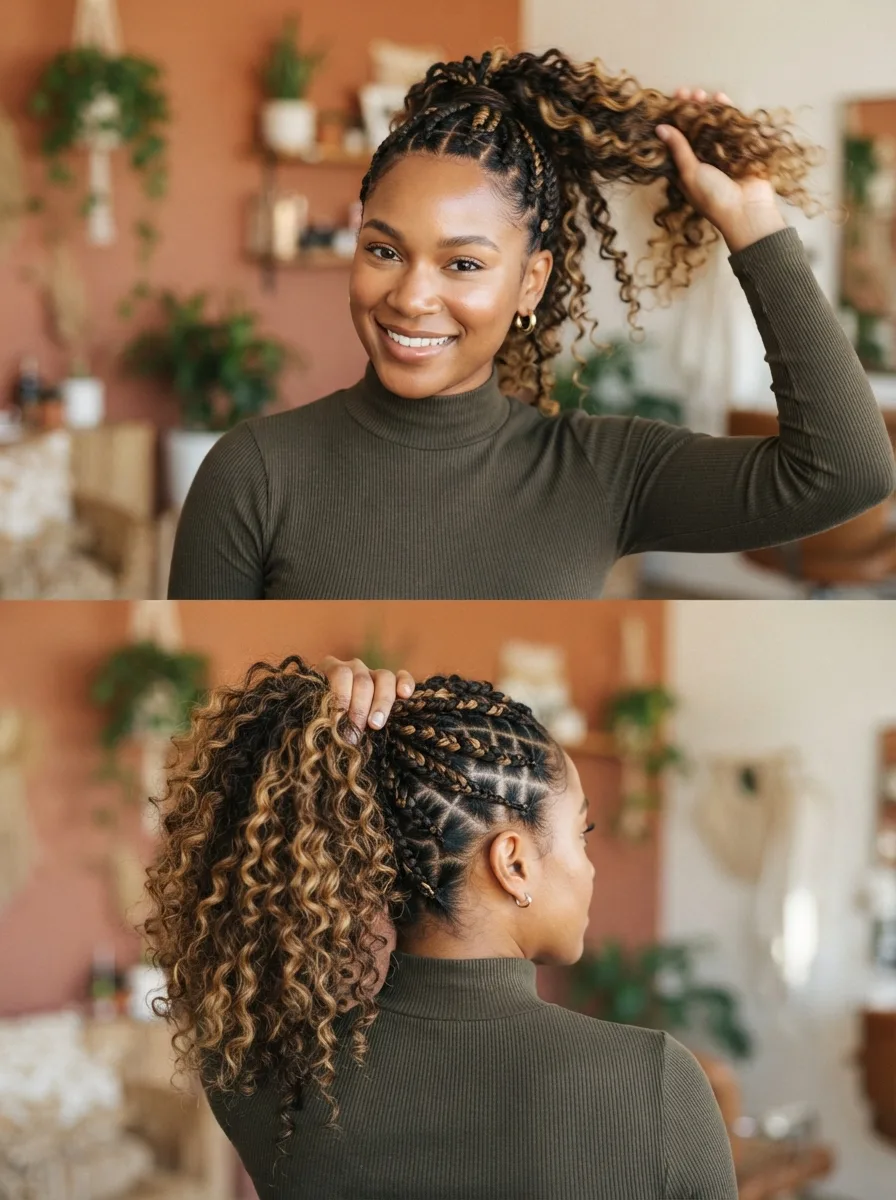
This is the category where medium has a real, practical edge over both extremes. Small braids can be almost too fine for a clean ponytail gather without excess bulk piling at the base; jumbo braids are often too thick and few in number to distribute evenly into an updo at all. Medium gathers smoothly.
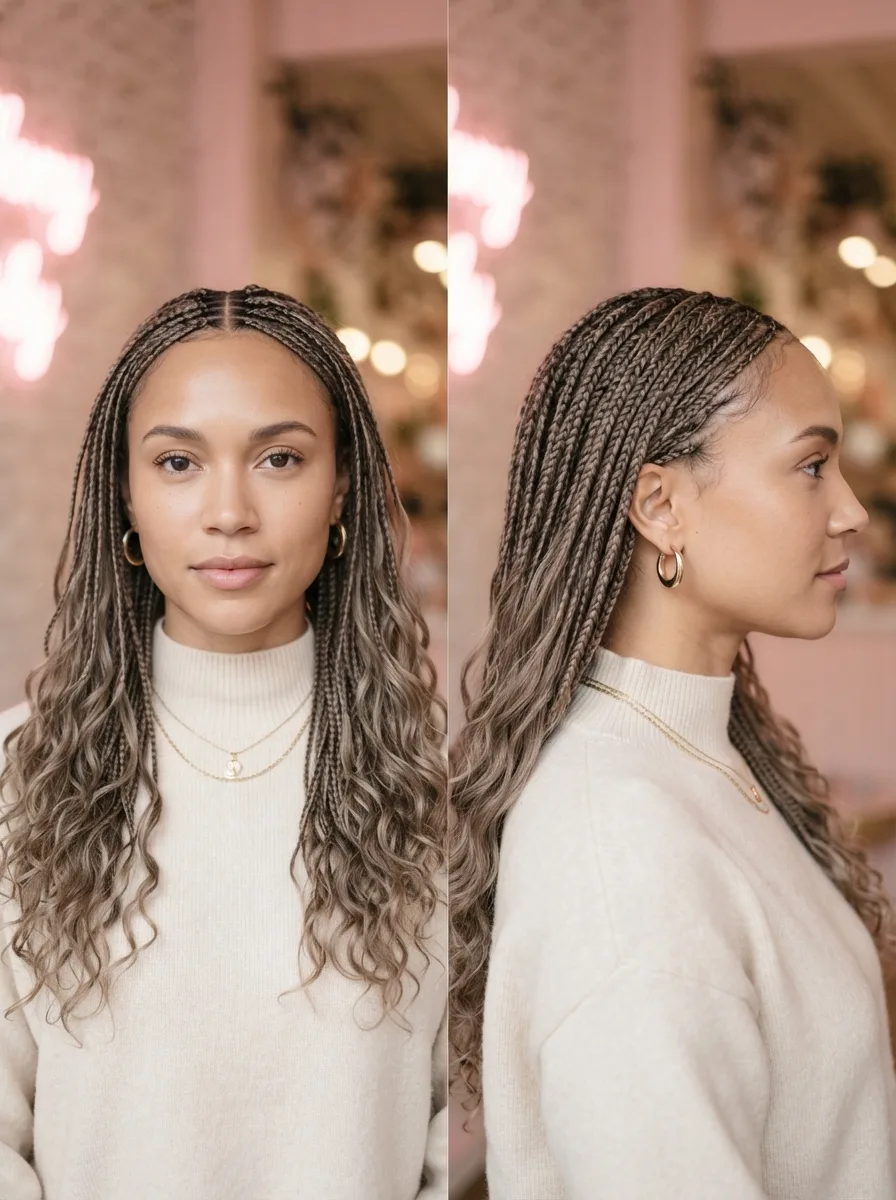
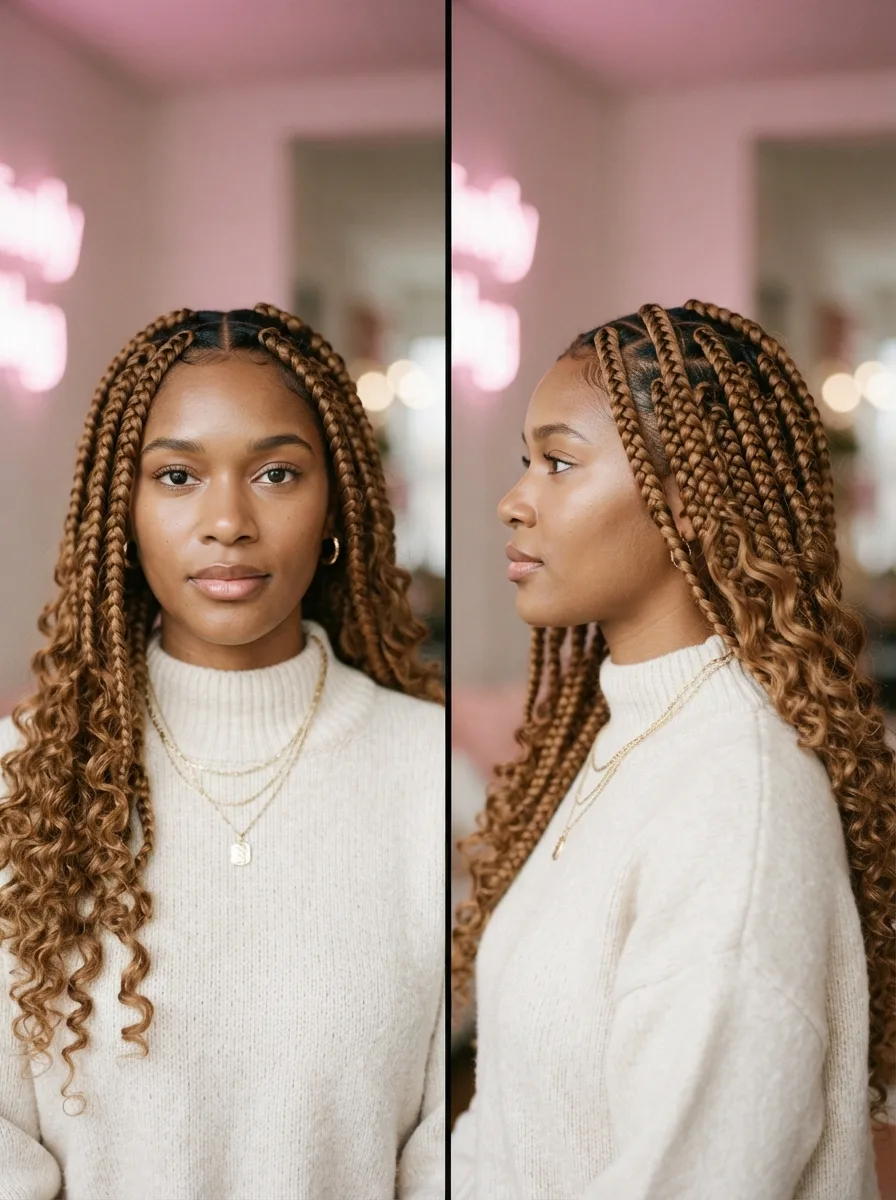
Center parts hold their shape well at medium width too, since there’s enough braid density along the part line to look deliberate without the almost-too-perfect grid effect a full small-braid install can have.
Face-framing pieces left loose at the temple also read softer at medium width than they do against denser small braids, where a couple of loose strands can look lost next to dozens of tightly packed sections.
A caramel or honey-blonde color melt shows up clearly at medium width — enough individual braids catch and reflect light that the gradient reads from a few feet away, without needing the extra length and bulk a jumbo set would take to display the same effect properly.
Movement is where medium is most noticeably different day to day. It’s light enough to genuinely swing and bounce while walking, the way a jumbo install (heavier, fewer braids concentrating more weight) generally doesn’t.
Because a medium braid can comfortably hold a small ring or bead without excess pull on the root, this is a good width for people who want a couple of accented braids rather than an all-or-nothing look.
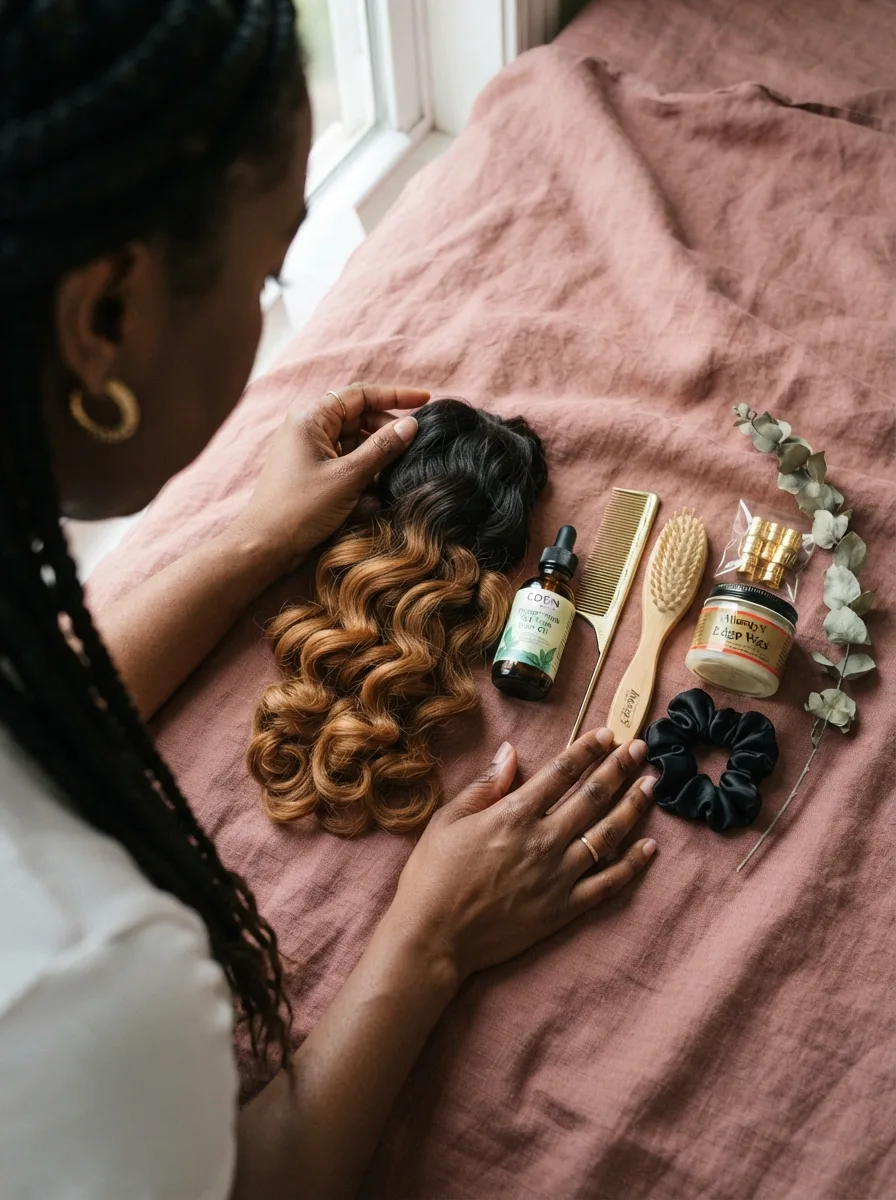
Care follows the same principles as any boho knotless install, but a few things shift slightly at medium width. Oil the scalp, not the braid length, every 2-3 days, and sleep on satin from day one, since medium braids have less mass per strand than jumbo and can dry out at the ends faster if neglected.
Most medium installs hold cleanly for 5-6 weeks — a little longer than a jumbo set, whose fewer, heavier braids tend to frizz and loosen sooner, and a little shorter than a small install, which typically lasts longest. Watch the root for slippage rather than counting days, and take it down or refresh once braids start sliding rather than just showing new growth along the part.
If you’re still deciding on width, size, and finish more broadly across the whole boho knotless category, our complete guide to boho knotless braids covers the feed-in technique, curl-accent options, and week-by-week care that apply no matter what size you land on.
Most braiders consider medium to be roughly the width of a standard drinking straw — thicker than the pencil-width sections used for small braids, thinner than the finger-width sections of a jumbo install. It's a relative term that varies slightly by braider, so bring a reference photo rather than just asking for 'medium' by name.
Expect 4-6 hours for a full head, noticeably faster than small braids (which can run 7+ hours) but slower than jumbo (2-4 hours). The exact time depends on your natural hair density and how much curly boho hair is being incorporated at the ends.
Neither is objectively better — it's a tradeoff. Small braids give the most natural, scalp-hugging look and the most styling versatility but take the longest and cost the most. Jumbo cuts install time in half but looks chunkier and offers fewer styling options. Medium is the compromise: enough styling flexibility for updos and partings, without an all-day appointment.
Boho Knotless Braids: Styles, Sizes & Length Chart →Typically $200-$350 for a full head with Kanekalon, landing between small braids (priciest, due to labor) and jumbo (cheapest). Adding human-hair curl accents or extending past shoulder length usually adds $50-$100 to that range.
Yes — medium is actually the easiest width for updos. The braids are thin enough to gather smoothly into a ponytail or bun without excess bulk at the base, but thick enough that you don't need dozens of bobby pins to keep flyaways controlled the way you would with small braids.
Both are protective styles with similar upkeep, but they look and move differently. Braids have a flatter, more structured texture; twists have a rounder, more textured look and tend to hold curl definition at the ends a little longer between refreshes. If you're deciding between the two, it often comes down to which silhouette you prefer rather than a practical difference.
Boho Twists: Types, Styles & How to Get the Look →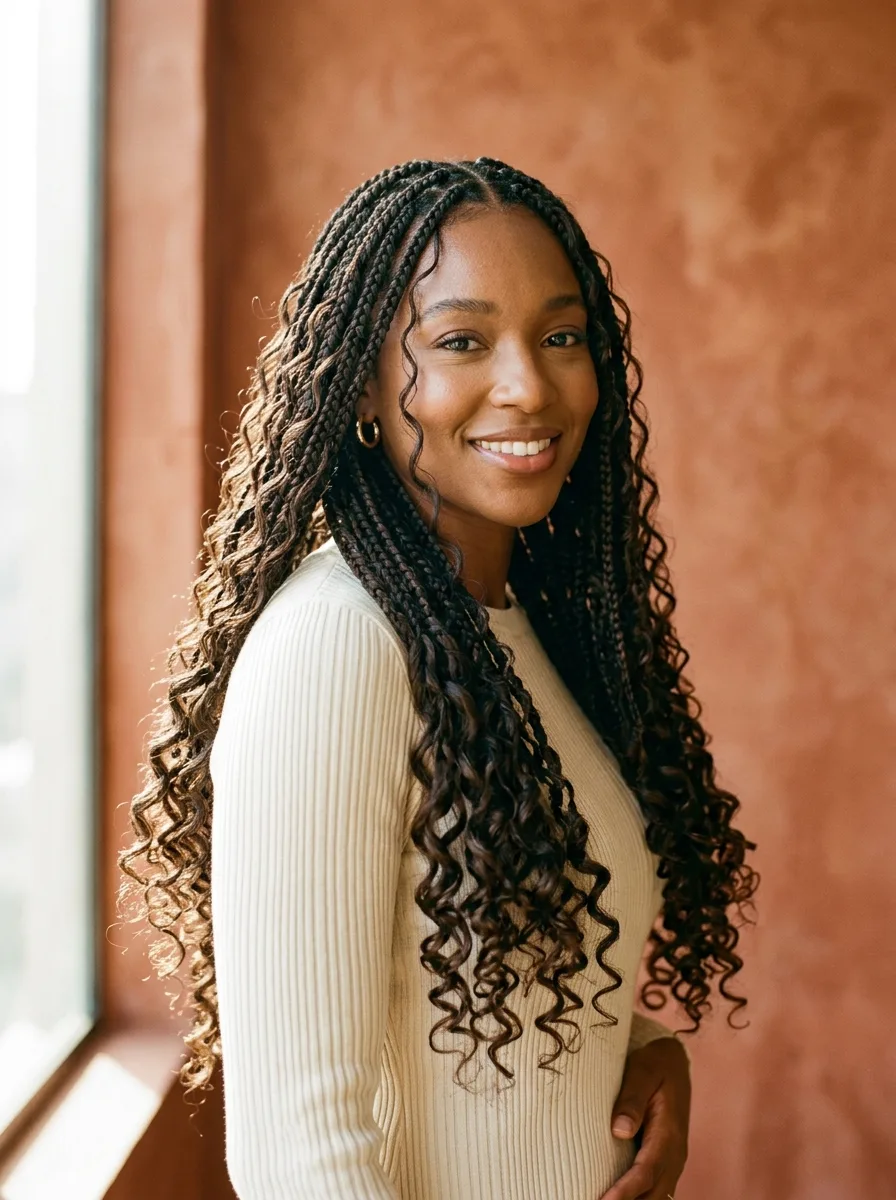 Braids
Hairstyles & Beauty
Boho braiding hair compared: human, synthetic and human-blend curls on look, lifespan and cost, plus the best textures, how much to buy, care and reuse.
 Braids
Hairstyles & Beauty
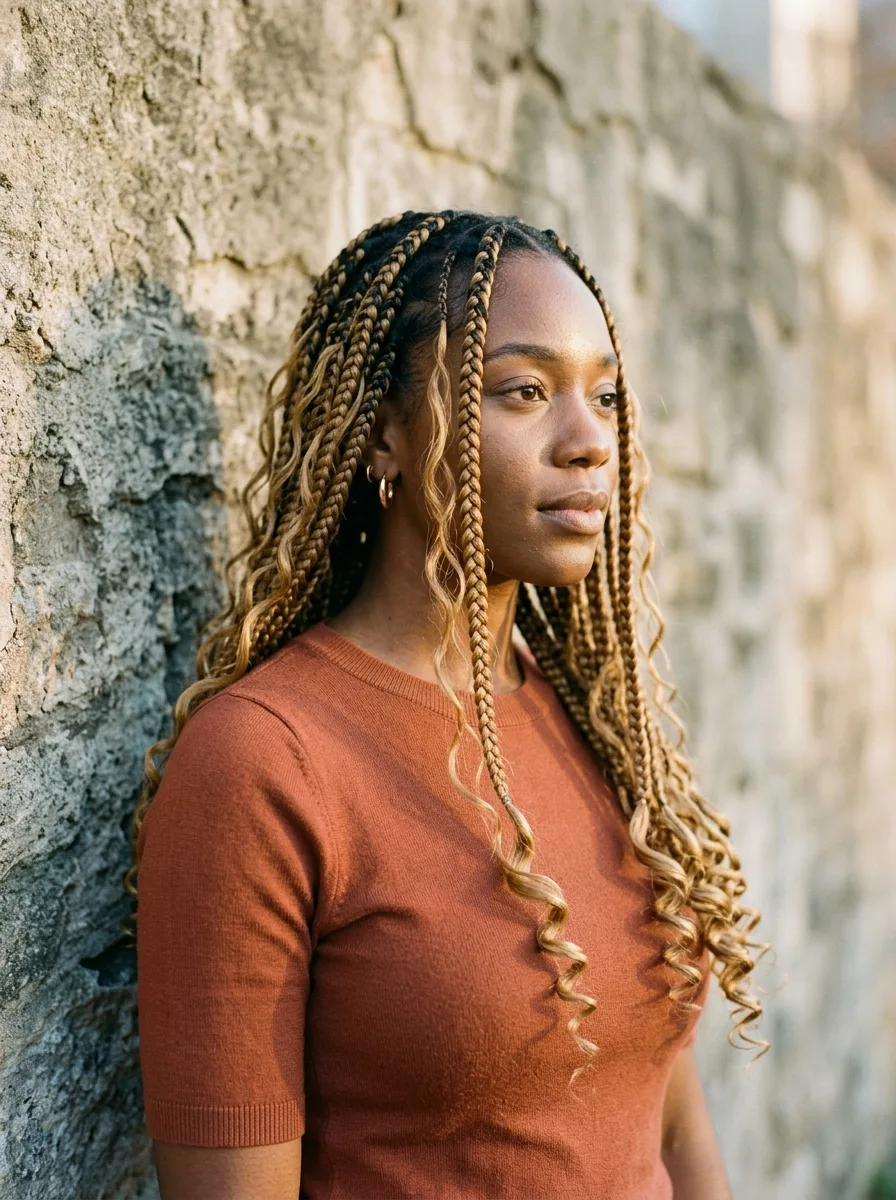
Boho box braids explained: knotted vs knotless roots, square parts, sizes, curly finishes, typical time, cost and wear, and who should pick box over knotless.
 Braids
Hairstyles & Beauty
Easy boho hairstyles for natural, curly and wavy hair: loose waves, halo braids, half-up plaits, messy buns, scarves and flowers, with steps for each look.
Stay in the loop
New home decor, outfit, and hairstyle inspiration in your inbox — about once a week. No spam, unsubscribe anytime.
No spam. Unsubscribe anytime.