Home Decor · Living Room
Dark Boho Living Room Ideas: Moody, Warm, Still Boho
How to build a dark boho living room — deep charcoal and terracotta, low warm lighting, and layered texture instead of the airier, lighter default boho look.
7 min read
Home Decor · Living Room
How to build a dark boho living room — deep charcoal and terracotta, low warm lighting, and layered texture instead of the airier, lighter default boho look.
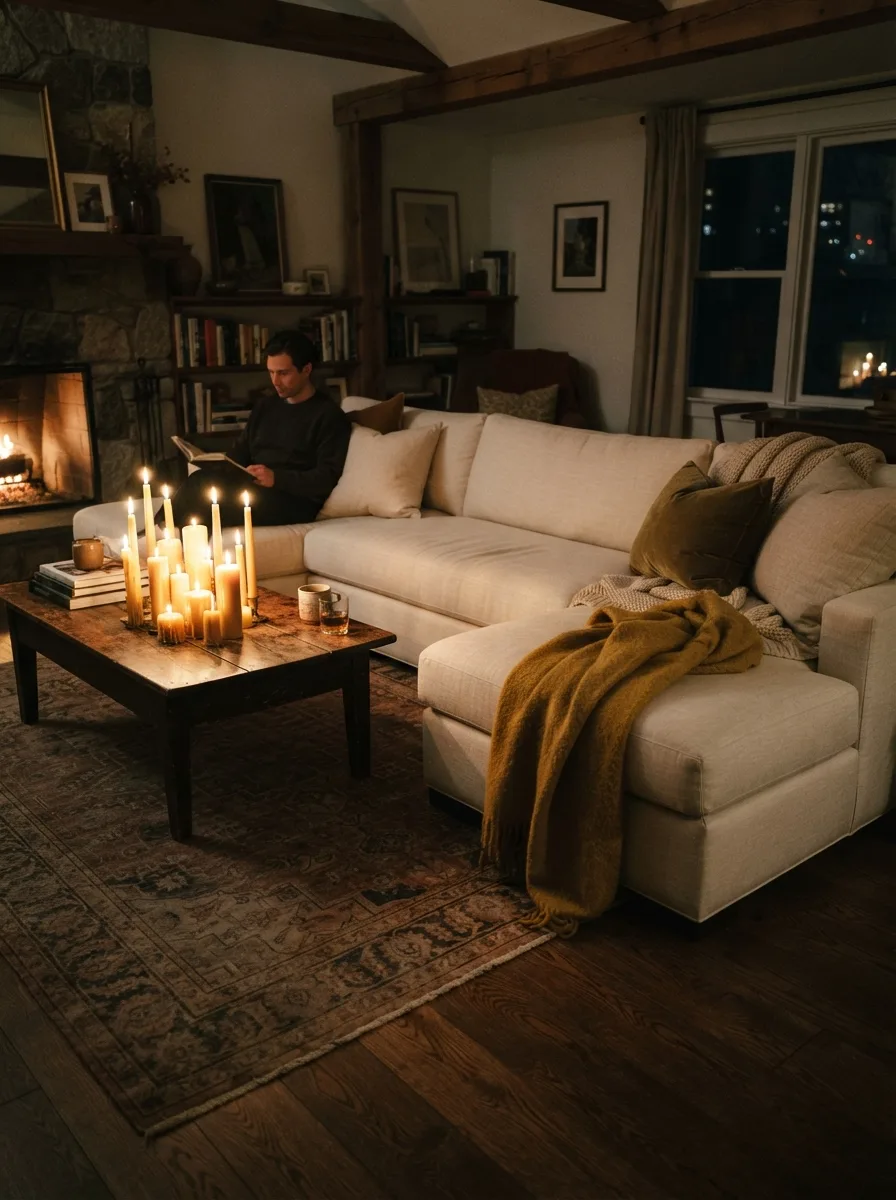
Most boho living room inspiration leans light — cream sectionals, jute rugs, white walls with a few terracotta accents. Dark boho takes the same bones — rattan, layered textiles, warm lighting, a rug with real pattern in it — and moves the palette the other direction: charcoal or near-black walls, deep rust and indigo instead of cream and mustard, and lighting built around candles and low lamps rather than bright daylight. It reads more dramatic and more evening-focused, but it’s built from the same materials as the lighter version, just recombined. Here’s how to get the moody version right without it just reading dim.
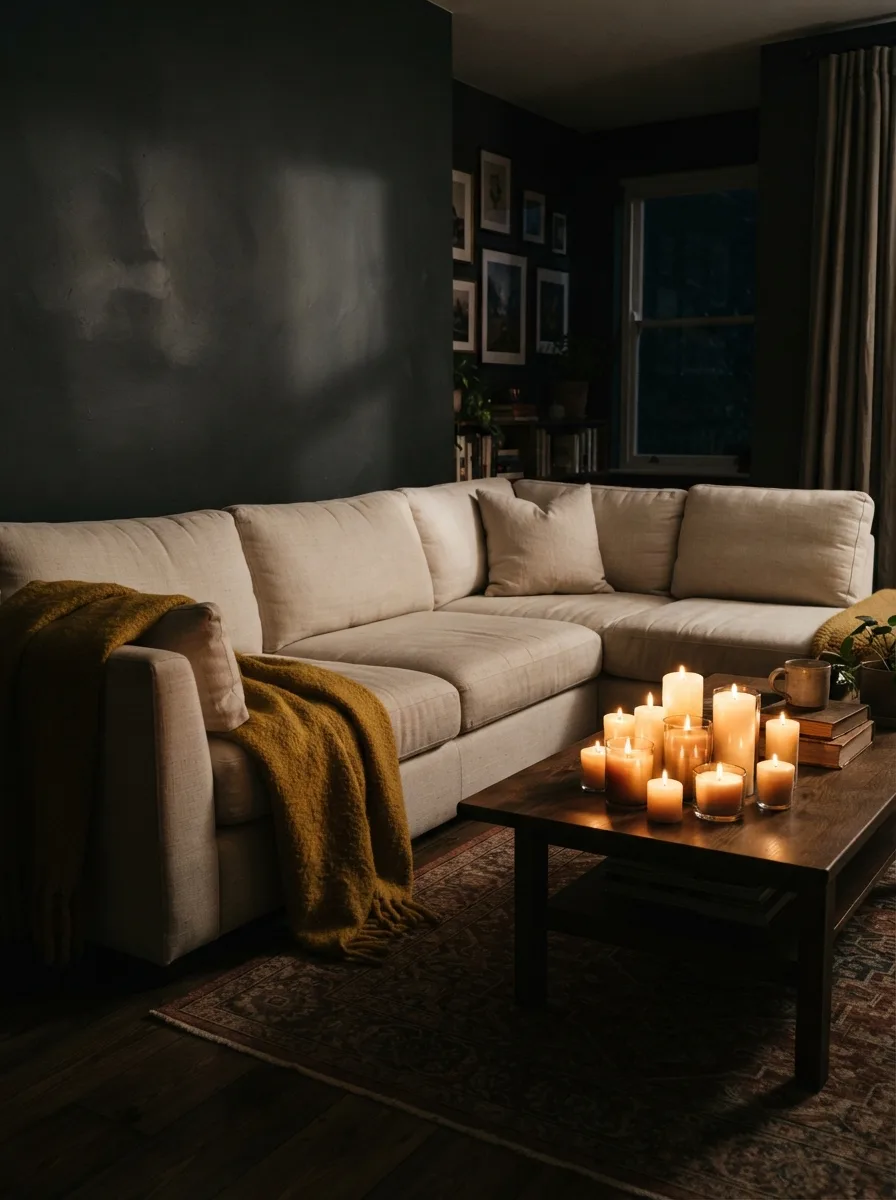
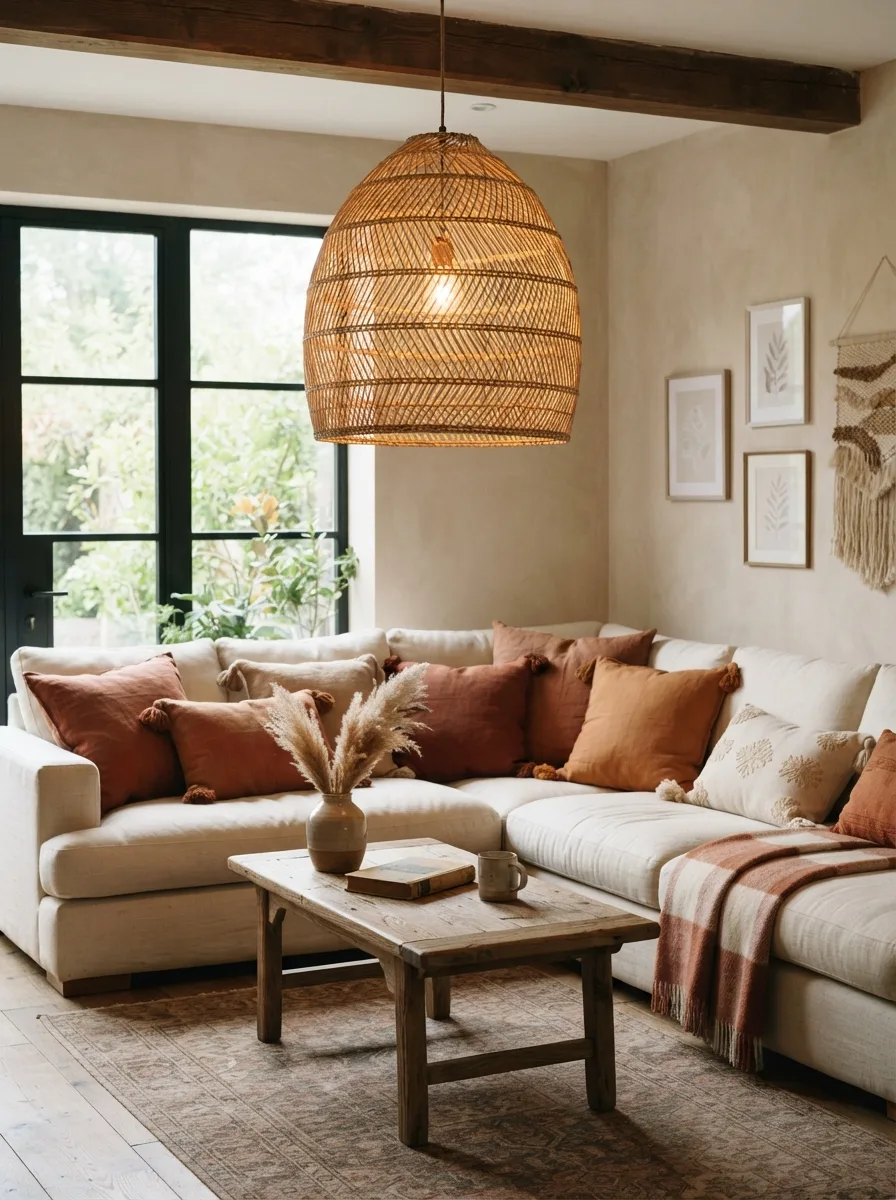
Everything else in this style is optional. The wall color against a light sofa is not — it’s the single highest-impact change, and it’s just paint. A deep charcoal, near-black, or very dark forest-adjacent wall color behind a cream or oatmeal sectional gives you the contrast that makes the whole room read intentional instead of just poorly lit. Skip painting the whole room; one wall, usually the one the sofa backs onto, is enough.
If you’re not ready to commit to paint, test it with lighting first. Turning off any overhead fixture and lighting the room with candles and one warm lamp gets you most of the mood without touching a wall — if you like how the room feels after a week of evenings that way, the paint is the logical next step.
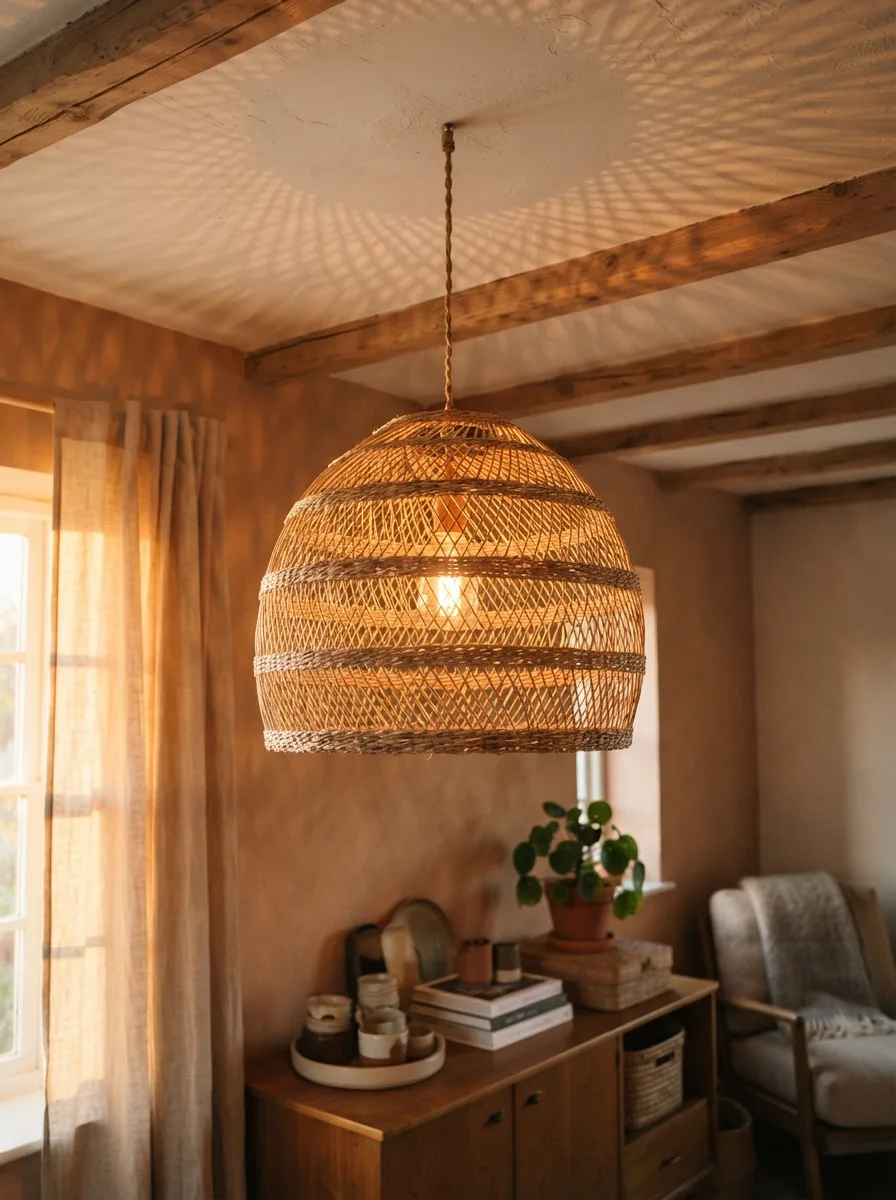
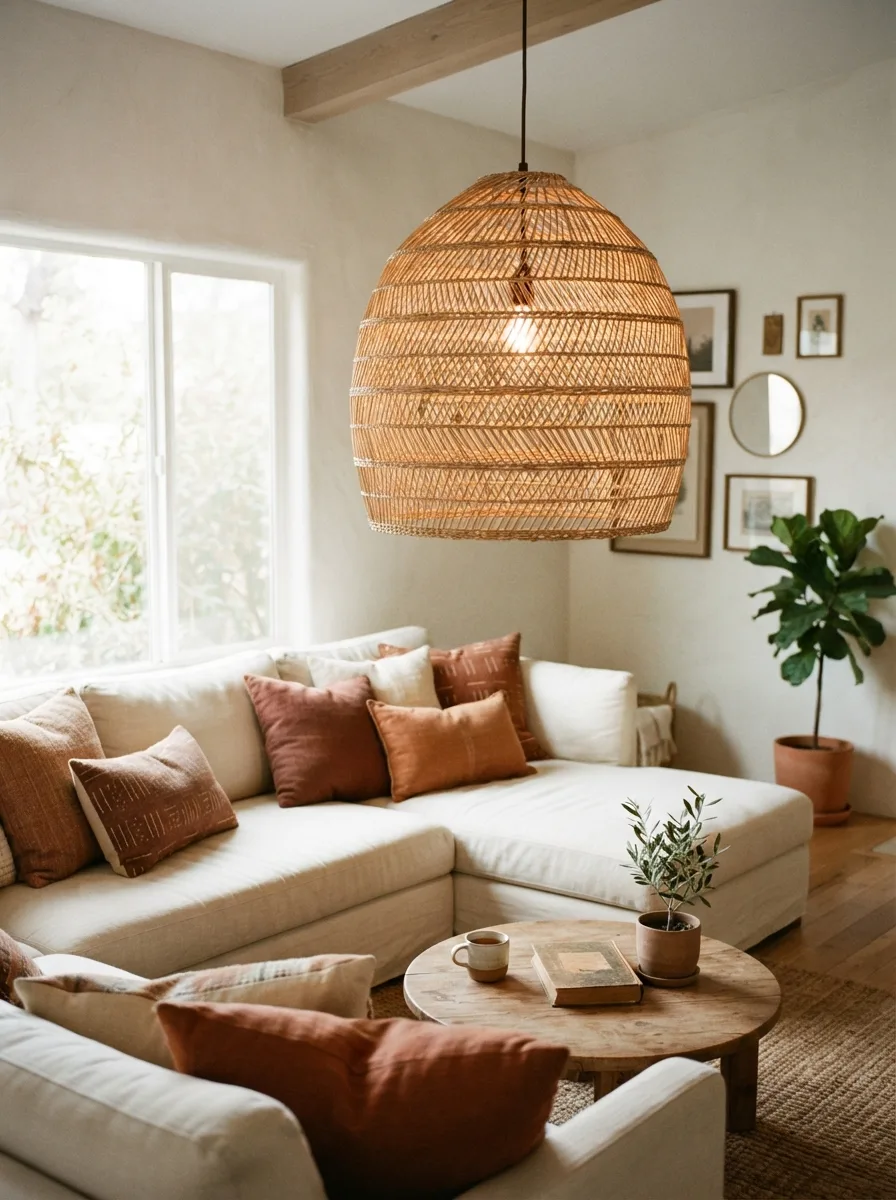
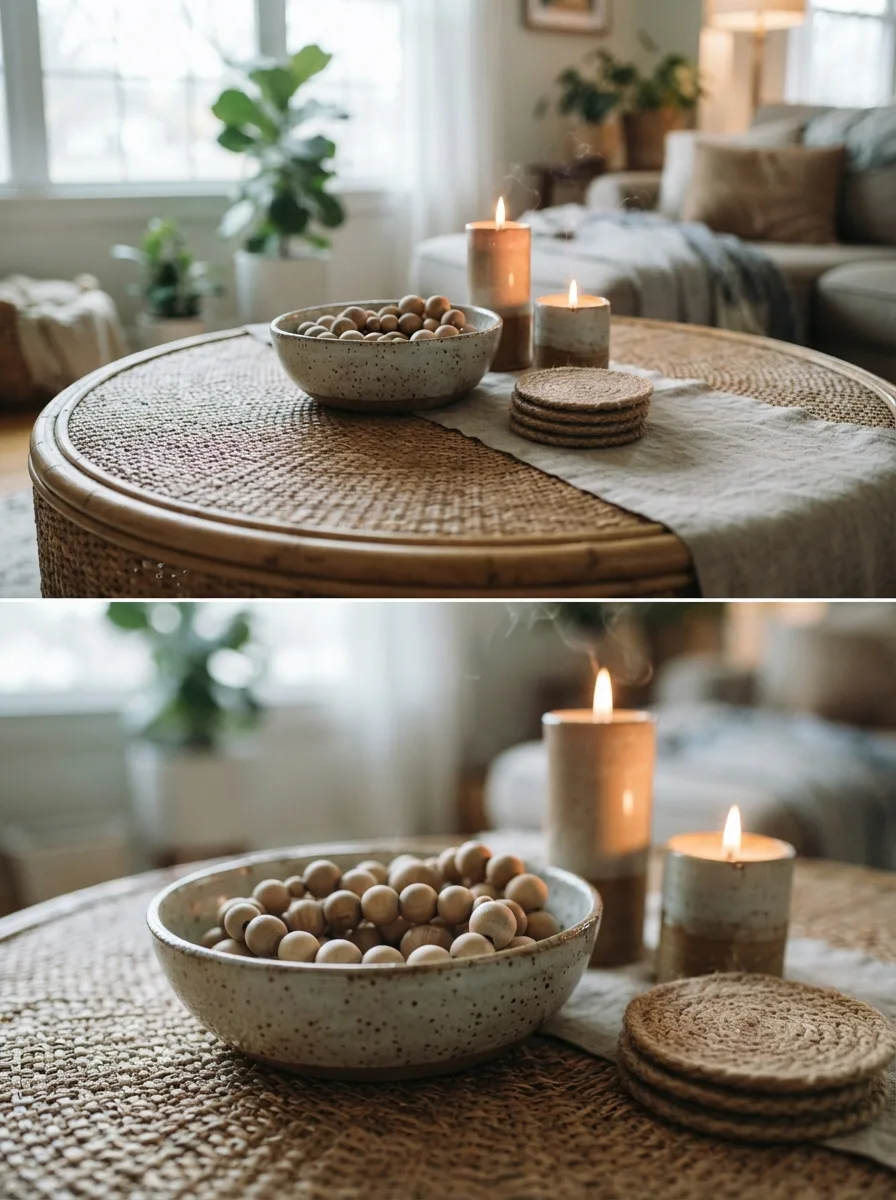
A dark-palette room needs deliberate warm light or it just reads dim rather than moody. Skip the overhead fixture almost entirely and build the room’s light from a cluster of candles on the coffee table, one or two warm floor or table lamps, and — if you have the ceiling height — a rattan pendant left dim rather than bright, which throws basket-weave shadows that add texture on top of light.
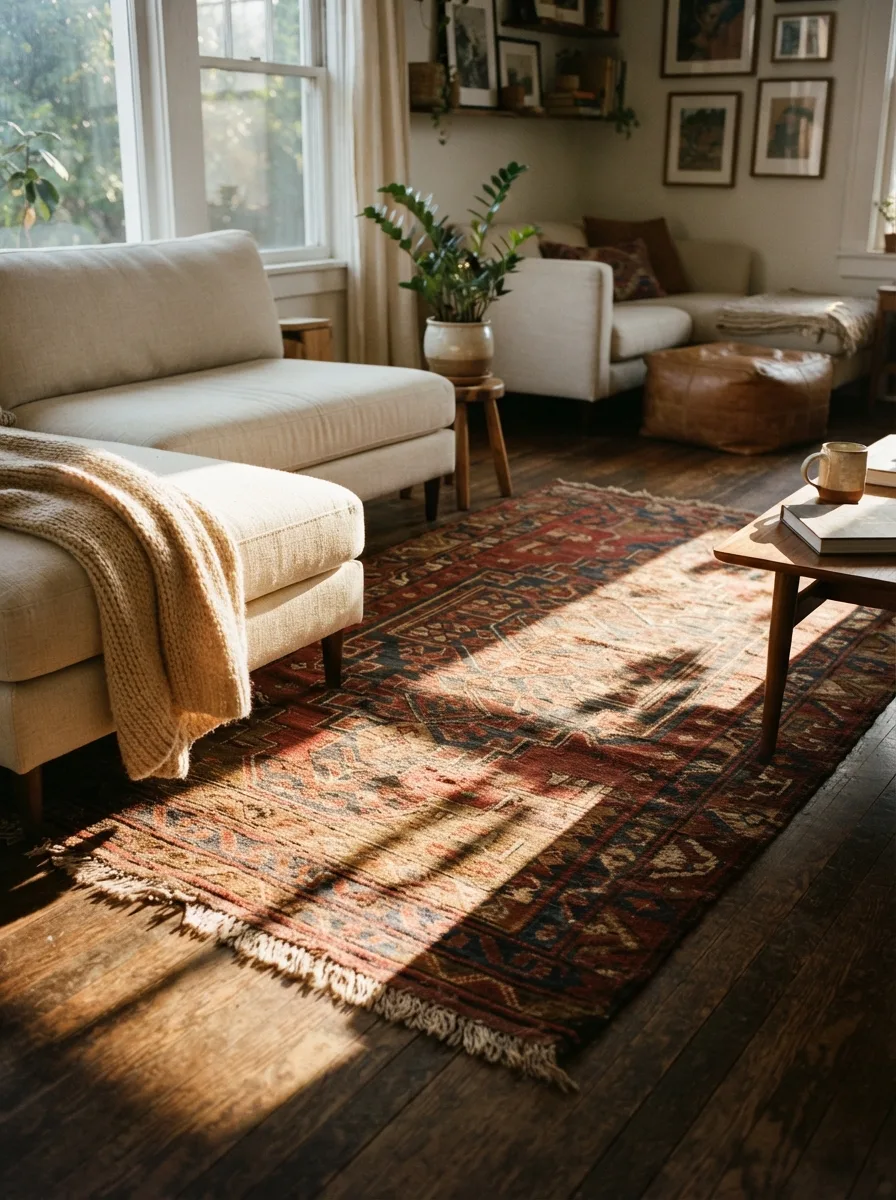
Don’t worry about blocking out daylight to make this work — the darkness here comes from wall color and lighting choices, not heavy drapes. A single shaft of afternoon sun cutting across dark floors is actually part of the look; lightweight curtains that still let some light filter through keep the room from feeling sealed off.
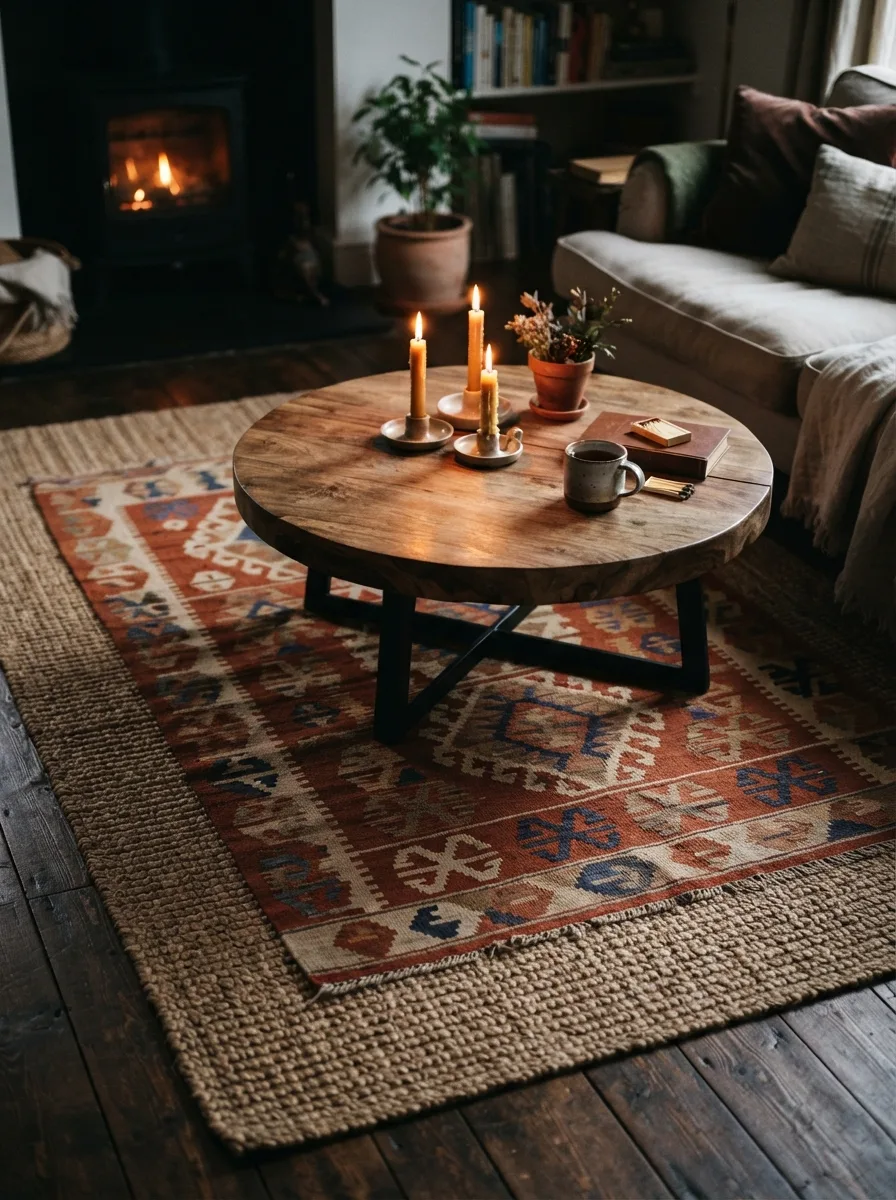
A pale jute rug, the workhorse of lighter boho rooms, tends to disappear against dark floors — there’s not enough contrast for it to register. A vintage-style kilim or Turkish rug in rust, deep indigo, and cream holds up far better here; the pattern and lighter threads give it enough presence to stay visible instead of blending into the floor underneath it.
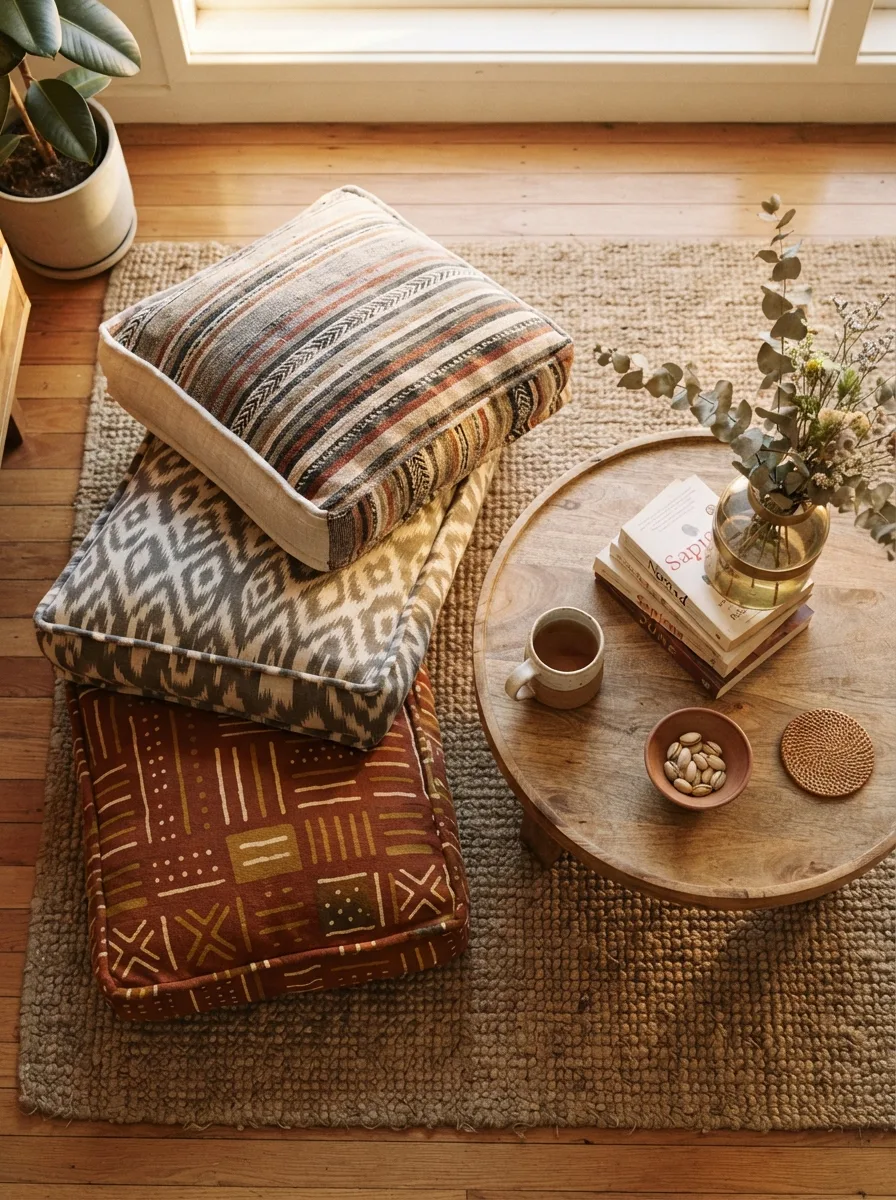
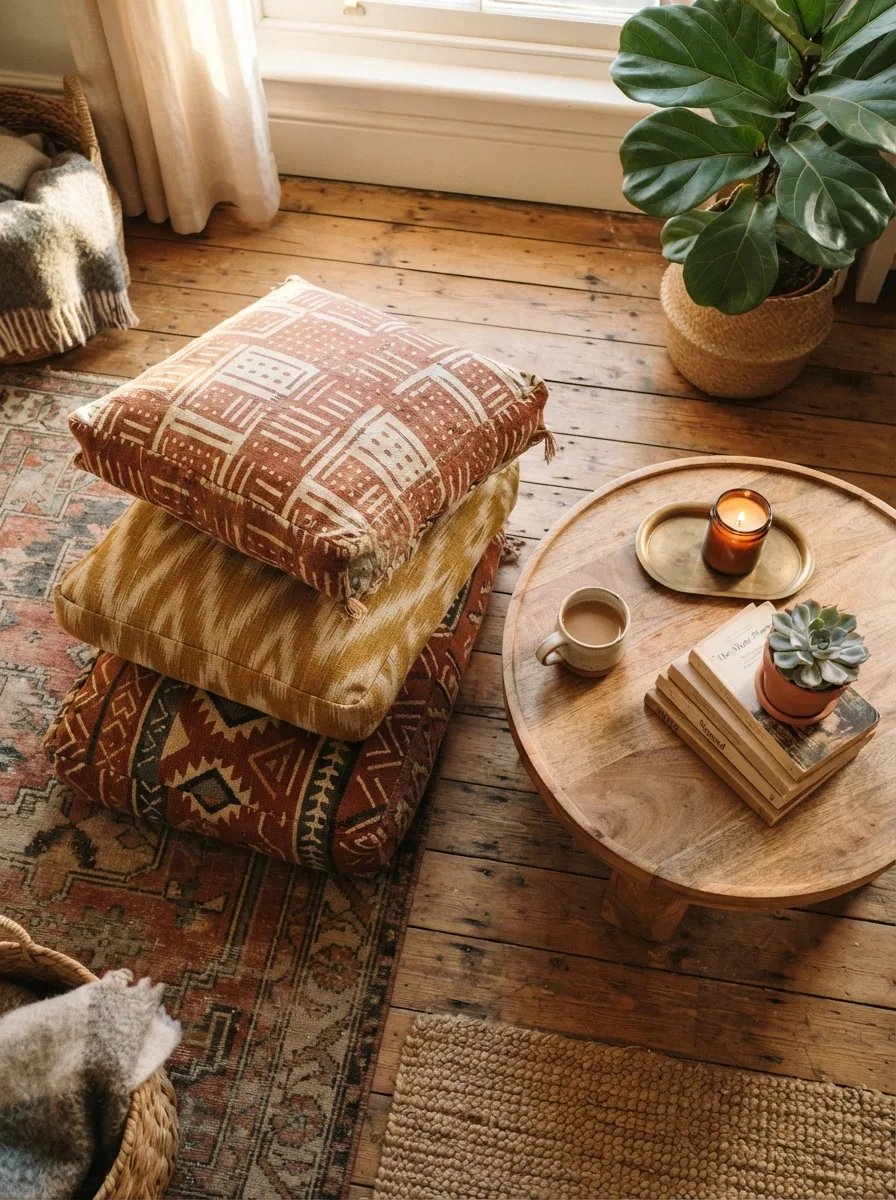
With a dark wall already doing the heavy lifting, terracotta and rust pillows against a cream sectional are enough color contrast on their own — you don’t need to add more pattern or brighter accent colors on top. Let one stack of patterned floor cushions, usually in ikat or mudcloth prints, be the boldest pattern in the room, and keep everything else a solid color so those cushions have room to stand out.
A stack of floor cushions near a low table also works as an entire second seating zone in a corner that’s too small for another chair — useful if you’re short on floor space but still want somewhere else to sit.
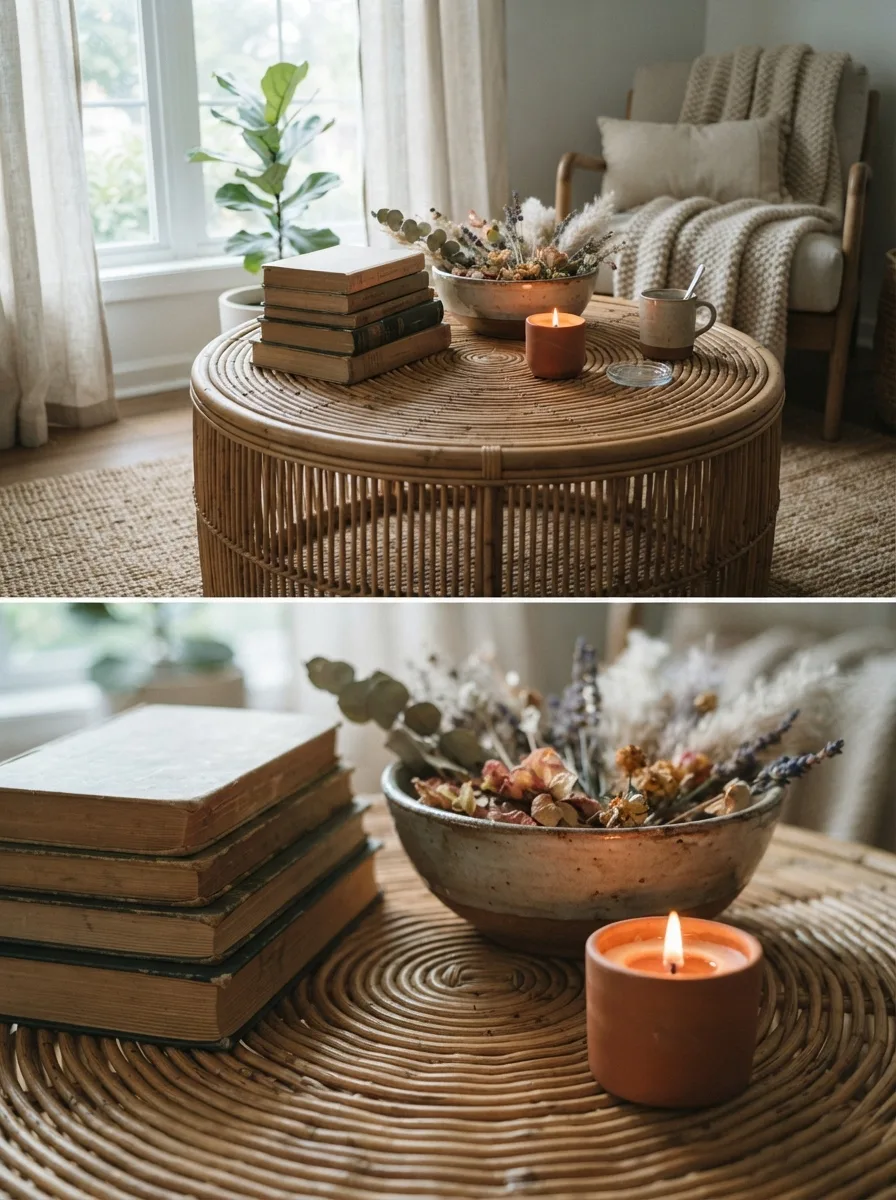
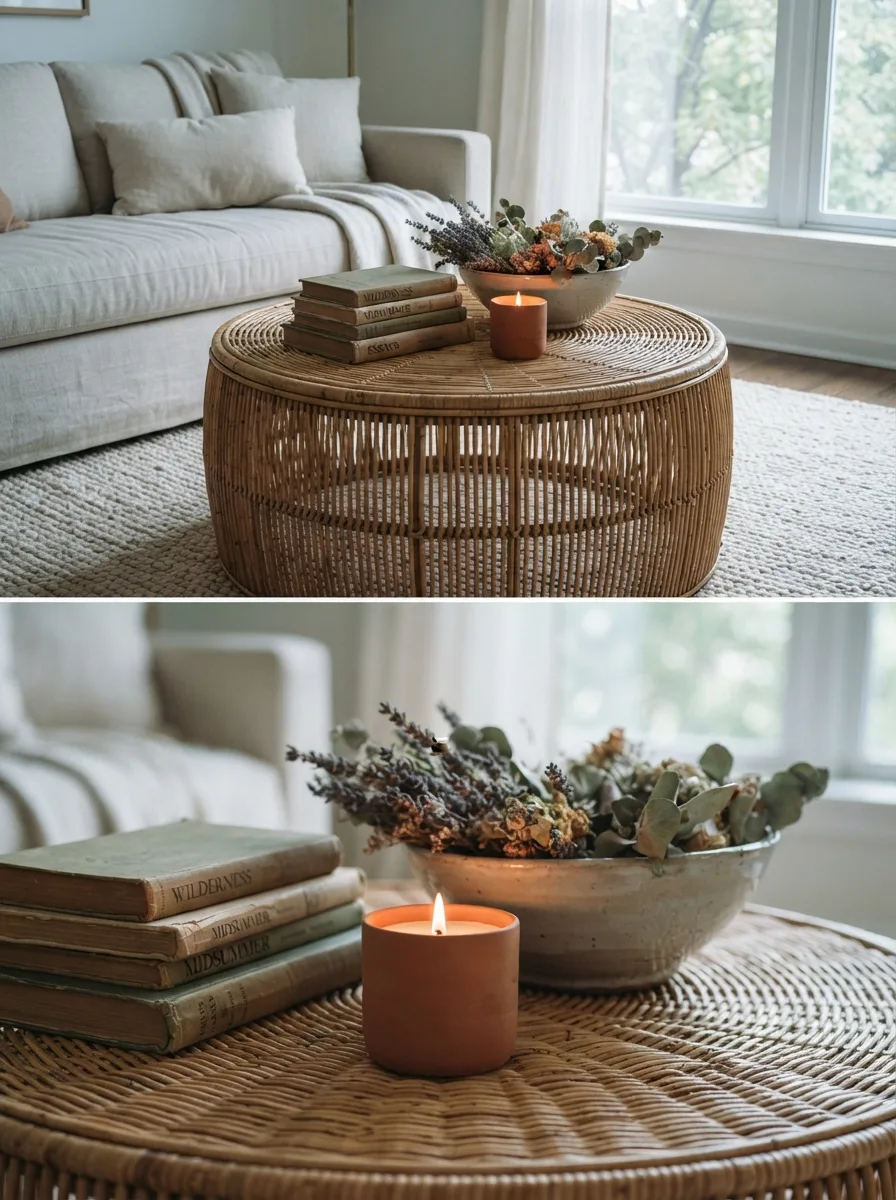
Keep the coffee table itself restrained — a bowl and a candle is enough. Dried florals or seed pods over fresh flowers matter more here than in a brighter room: they hold their color for months under low light instead of needing a weekly refresh, and their muted tones fit the palette better than anything bright would.
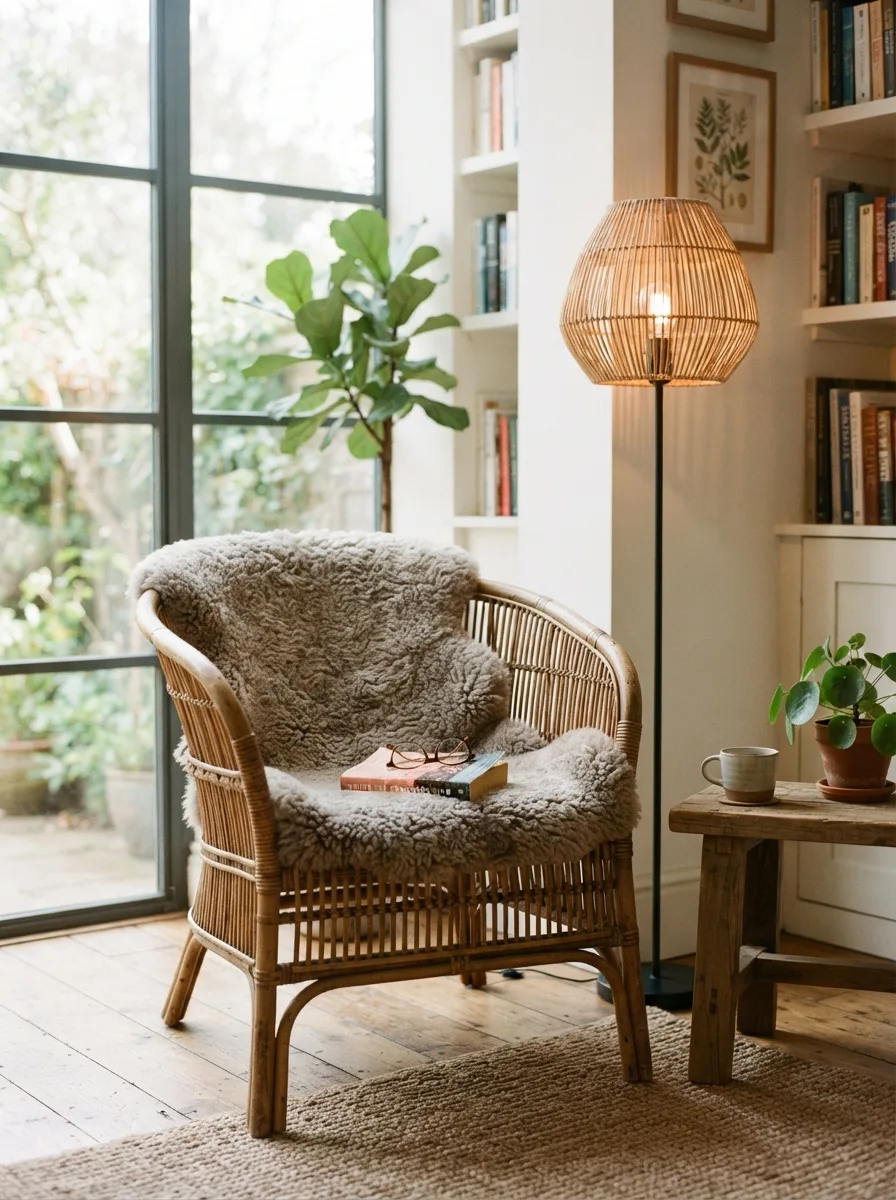
If you have a corner near a window, a rattan chair with a sheepskin throw and a warm floor lamp makes the most of it — dark bookshelves nearby only add to the effect rather than fighting it, since the whole point of this look is depth and layered warmth rather than brightness.
Not if you keep the furniture and rug pale. The trick behind dark boho is contrast, not an all-dark room — a cream or oatmeal sectional against a charcoal wall reads as intentional depth rather than a cramped space, because the eye still has somewhere light to land. A fully dark room with dark furniture on top is what actually reads small.
That guide covers the lighter, airier default boho look — cream and jute with pops of terracotta and mustard. This one flips the palette: deep charcoal or near-black walls, low warm lighting instead of bright daylight styling, and richer jewel-toned rugs doing more of the color work. If the lighter version is more your speed, or you want the fuller room-by-room breakdown, start there.
Boho Living Room Ideas →Swap your lighting before you touch the walls. Turn off any overhead fixture and light the room with a cluster of candles, one warm floor lamp, and a dim rattan pendant instead — that alone gets you most of the mood. If you like it after a week of evenings, the wall color is the next step; if you don't, you've spent nothing testing it.
No — the darkness here comes from wall color and low lighting choices, not from blocking daylight. A single shaft of afternoon sun across dark wood floors is actually part of the look; it's what keeps the room from reading closed off. Sheer or lightweight curtains that still let daylight filter through work better than heavy blackout drapes for this specific style.
A vintage-style kilim or Turkish rug in rust, deep indigo, and cream holds up against dark stained floors far better than a solid jute rug would — the pattern and lighter threads give it enough contrast to stay visible instead of blending into the floor. Save jute for a lighter-floored room; it's too tonally close to dark wood to register here.
The same core moves — deep wall color, low warm lighting, jewel-toned textiles — translate well, but a dining table needs enough direct light over it to actually eat by, so a single dimmable pendant over the table matters more there than it does over a living room sofa. Our boho dining room guide covers pendant choices and table styling specifically.
Boho Dining Room Ideas for Every Space →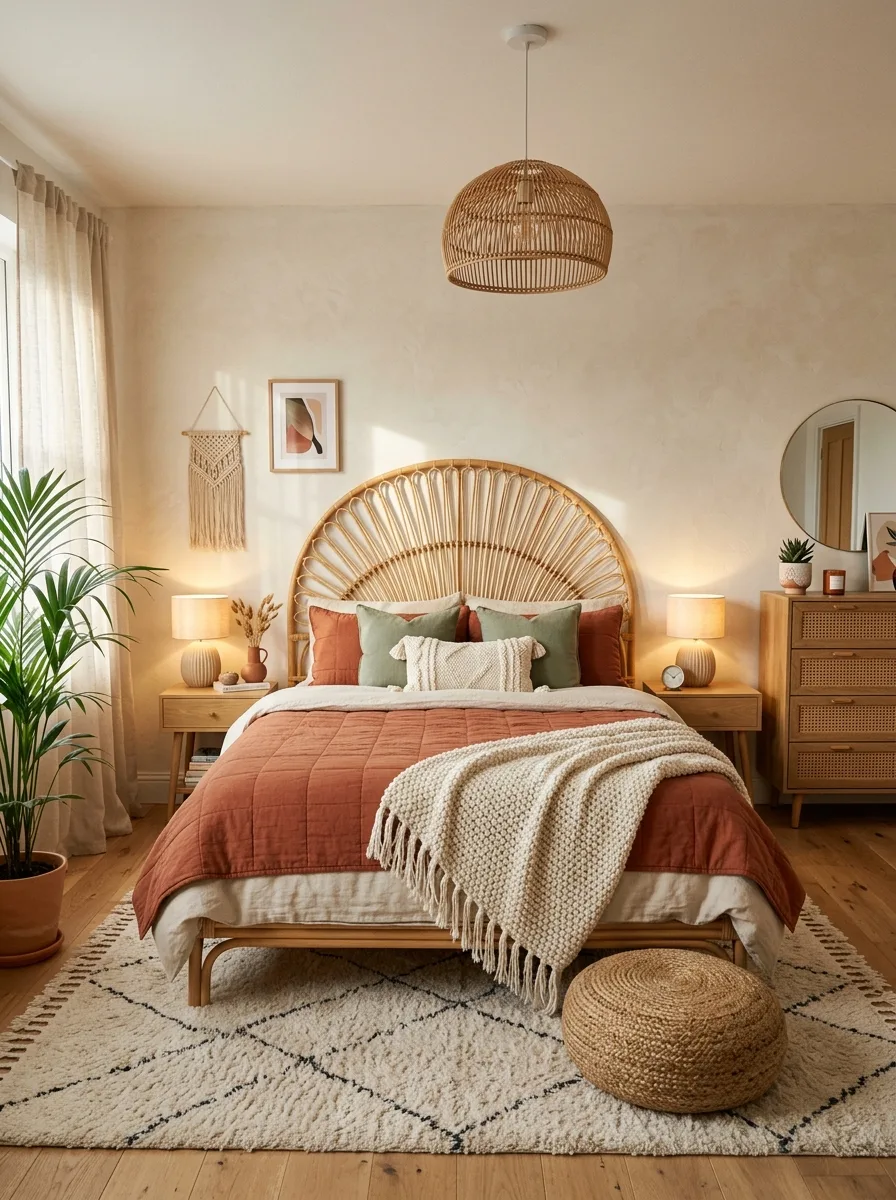 Living Room
Home Decor
Boho furniture guide: rattan and cane beds, platform beds, peacock chairs, daybeds, poufs and bedroom sets, plus how to mix, thrift and care for each piece.
 Bedroom
Home Decor
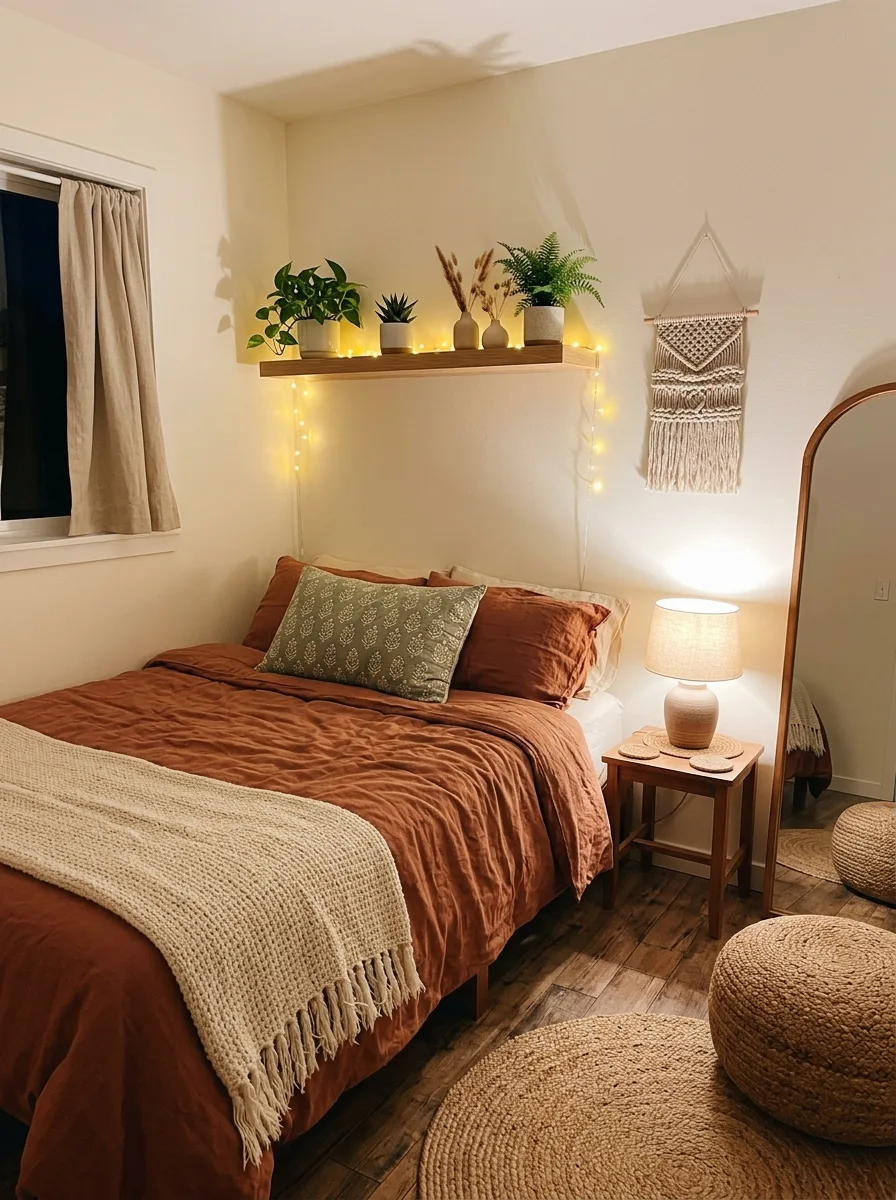
Boho room ideas for small spaces: dorm rooms, studios, teen bedrooms and rentals, with renter-safe decor, multi-use furniture and a typical budget table.
 Wall Art & Decor
Home Decor
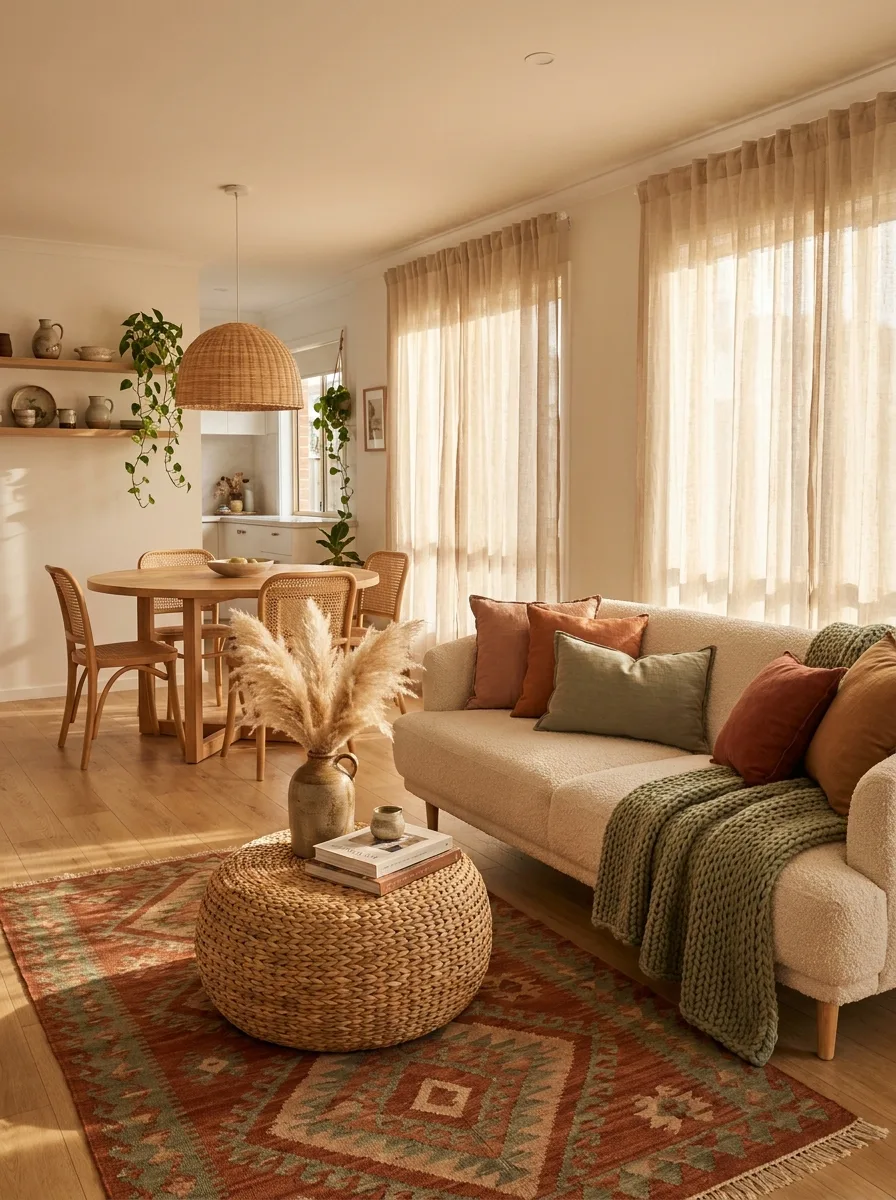
Boho decor explained: the core principles of bohemian interior design, a room-by-room guide, boho vs boho chic vs modern boho, and the mistakes to avoid.
Stay in the loop
New home decor, outfit, and hairstyle inspiration in your inbox — about once a week. No spam, unsubscribe anytime.
No spam. Unsubscribe anytime.