How to use boho wallpaper without it taking over a room — botanical and earth-tone patterns, accent-wall vs. full-room application, and renter-friendly peel-and-stick options.
Boho wallpaper gets a bad reputation for the same reason boho decor in general sometimes does: it’s easy to add too much of it at once. A big botanical print or an earth-tone pattern is one of the fastest ways to make a plain room feel considered, but it’s also one of the easiest things to overdo — wallpaper the wrong wall, or all four walls instead of one, and a room that should feel warm starts feeling busy instead. Here’s how to use it the way it actually works best: as one deliberate, contained decision rather than a blanket treatment.
Pick One Wall, Not the Whole Room
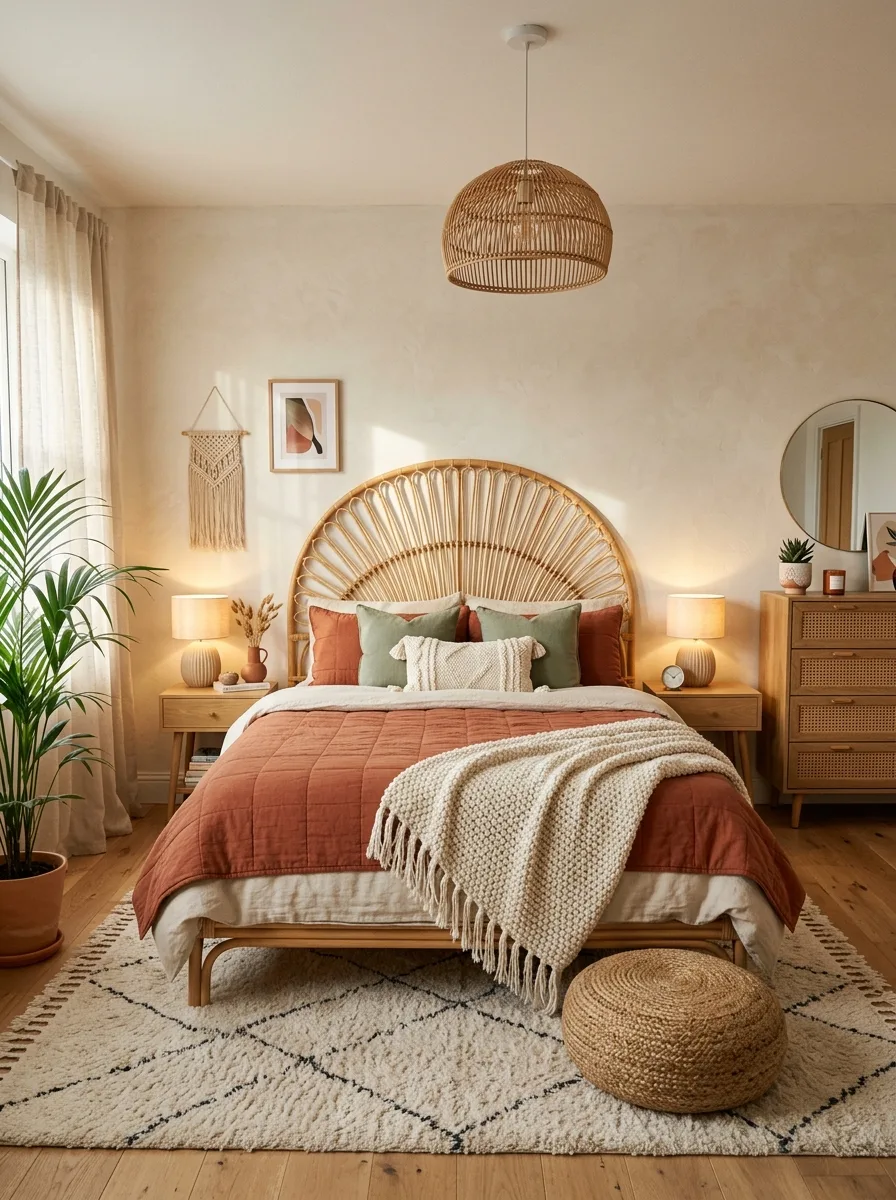
For almost every bold boho pattern — botanical, block-print, earth-tone abstract — a single accent wall does more for a room than papering all four walls would. The classic choice is the wall behind a bed’s headboard, but a dining wall or a fireplace wall works just as well, and in some ways better: both get seen mostly from a seated position, at a shorter distance, which is exactly the vantage point that makes a bolder pattern read as a deliberate feature instead of visual noise you’re walking past all day.
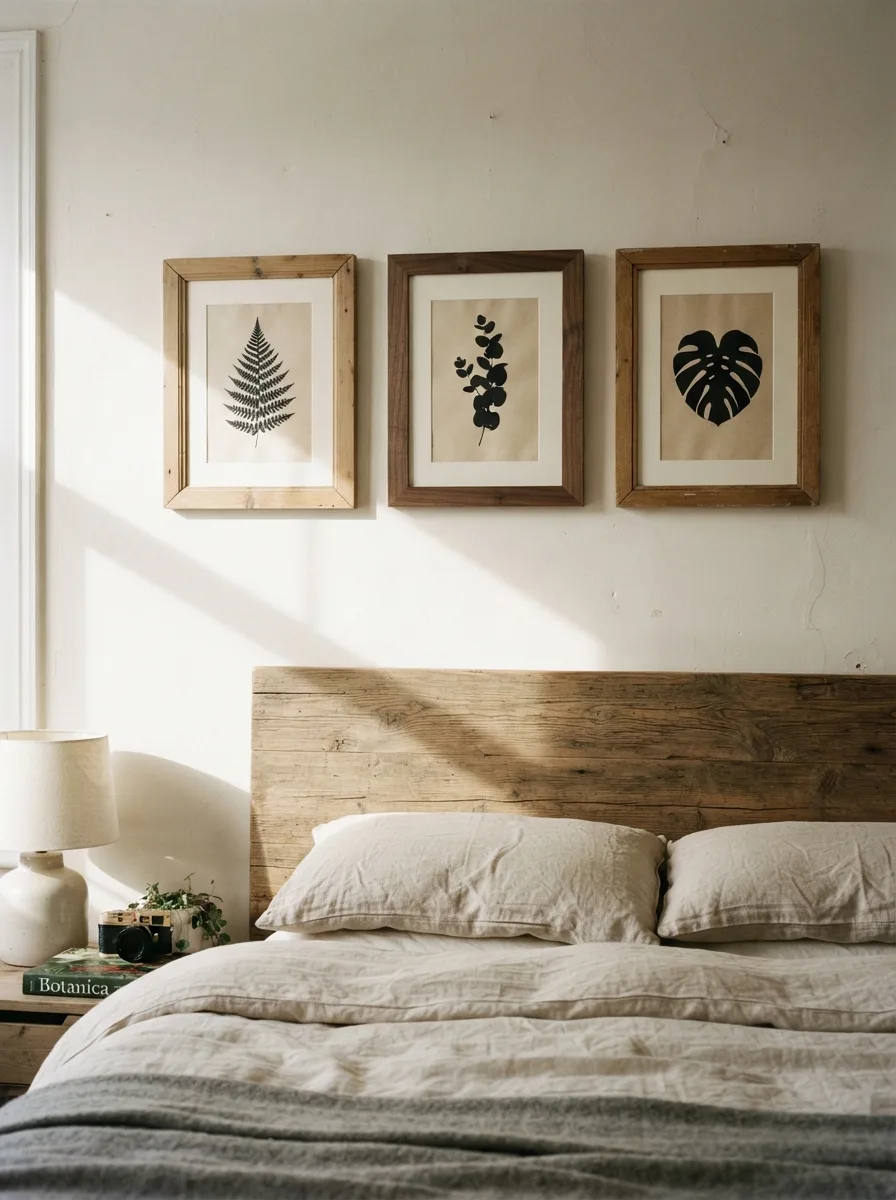
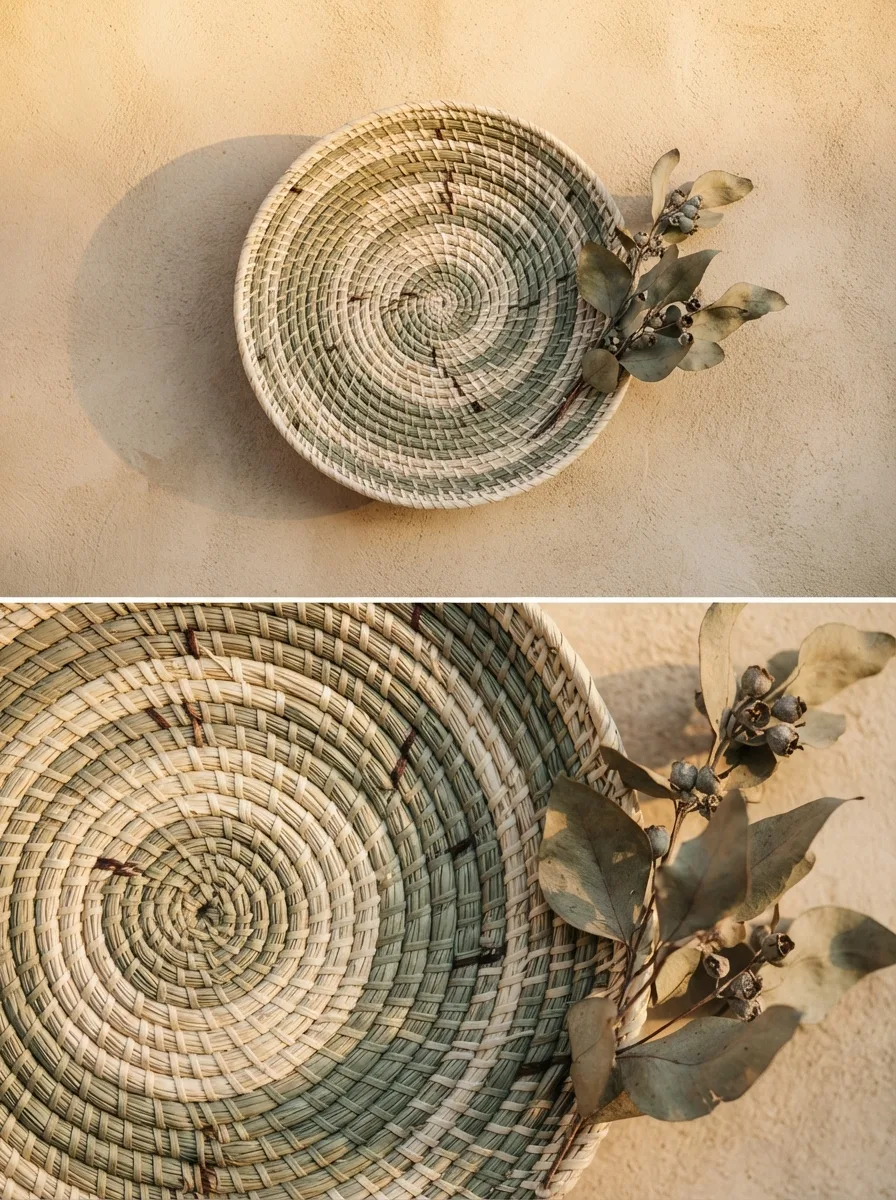
A repeated print in a grid is close to what a botanical wallpaper does at a larger scale — if this reads calm to you, a patterned accent wall behind the headboard will too.
Save full-room wallpaper application for smaller, more contained spaces — a powder room, a hallway, an entryway — where there’s naturally less furniture and art competing with the pattern for attention. In a bedroom or living room you actually spend time in, one wall is almost always the better call.
The Three Patterns That Actually Read as Boho
Not every busy print counts as boho wallpaper. Large-scale botanical prints — monstera leaves, ferns, palms — are the most recognizable option and the safest starting point if you’re new to using pattern at this scale. Earth-tone abstract shapes in terracotta, rust, and clay are the second, and block-print-style patterns that echo mudcloth or ikat textiles are the third. Skip anything too geometric or with a metallic finish; both tend to read mid-century or art deco instead of boho, even in a warm color palette.
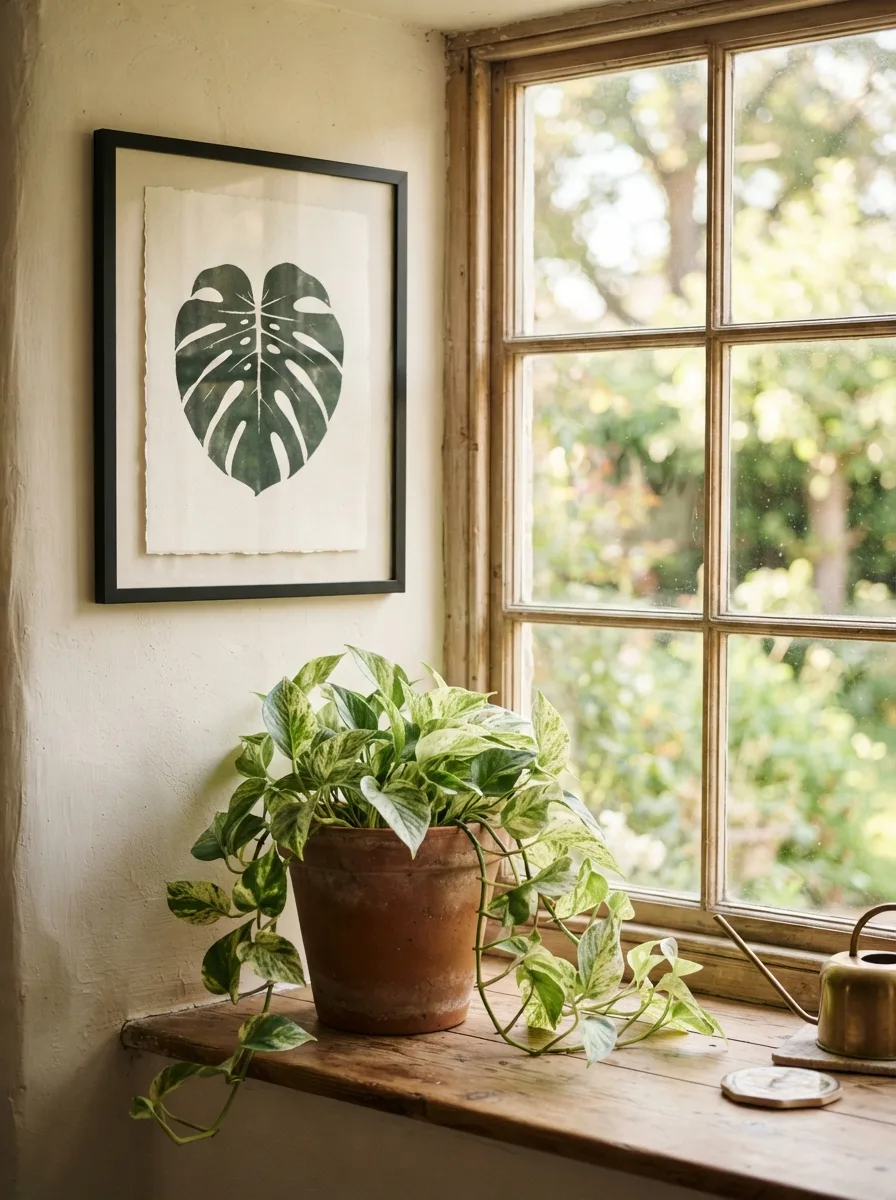
A single botanical print is the test run for a full botanical-print wallpaper — if you keep reaching for more framed leaves, the pattern will earn its place on the wall.
A good way to test whether a botanical pattern will actually work in your space before committing to a full roll: look at what’s already growing in the room. Wallpaper that echoes real plants you already have nearby reads considered; wallpaper that invents an entirely different plant world from scratch can feel disconnected from the rest of the room.
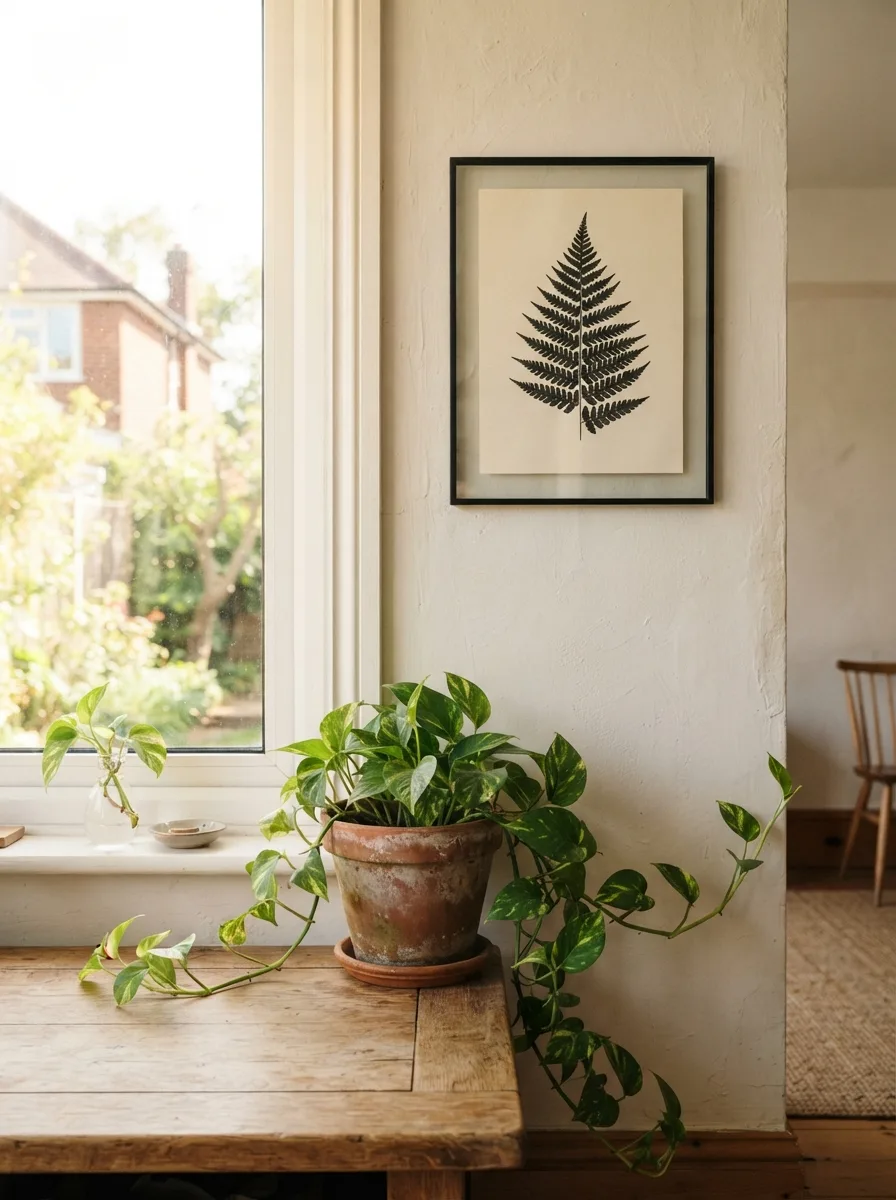
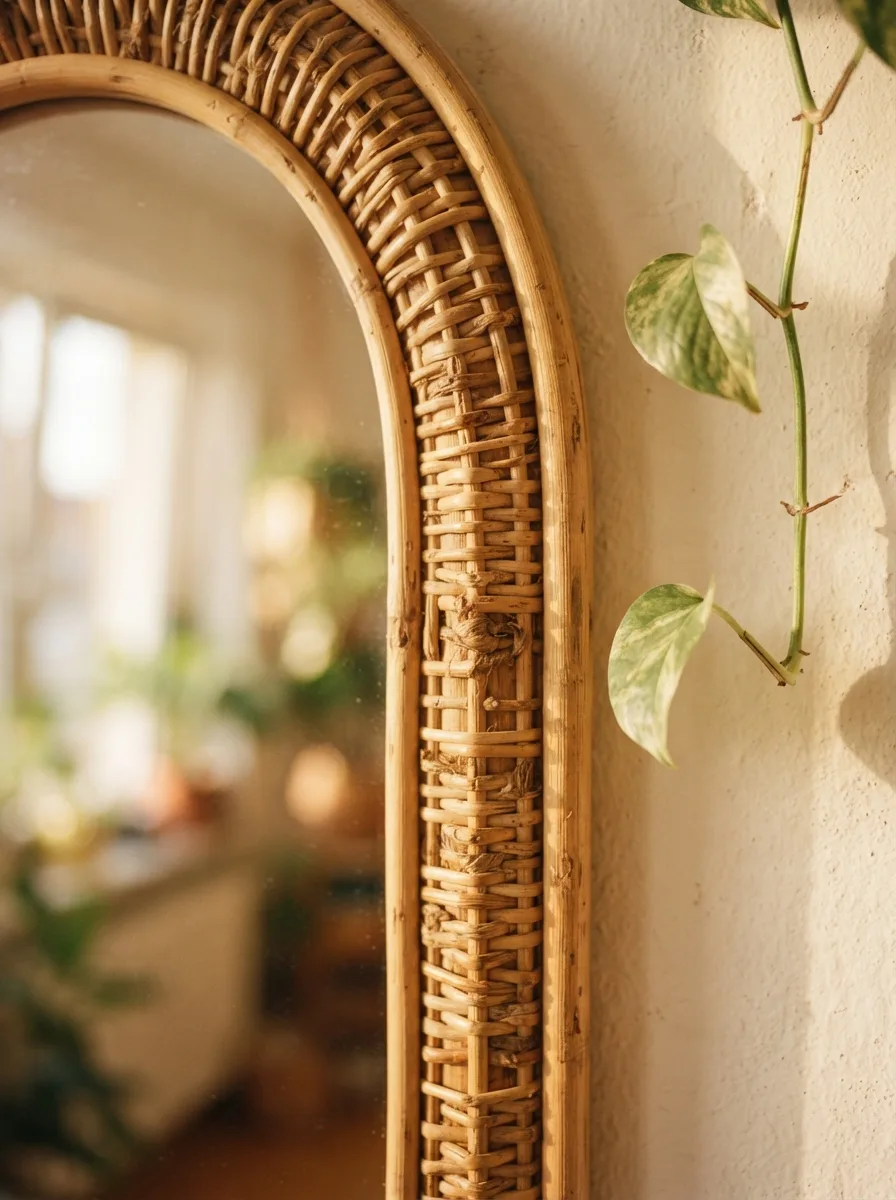
Botanical wallpaper works best in a room that already has real plants in it — the print should echo what's already growing nearby, not invent a jungle from scratch.
Test the Color in Your Actual Light Before You Buy a Roll
A wallpaper swatch under store lighting can look completely different once it’s on your wall under your room’s actual daylight and lamp light. Before committing, hang a framed piece in a similar color story — a textile scrap, a print, even a paint swatch taped up — on the wall you’re considering, and watch how the color reads across a full day.
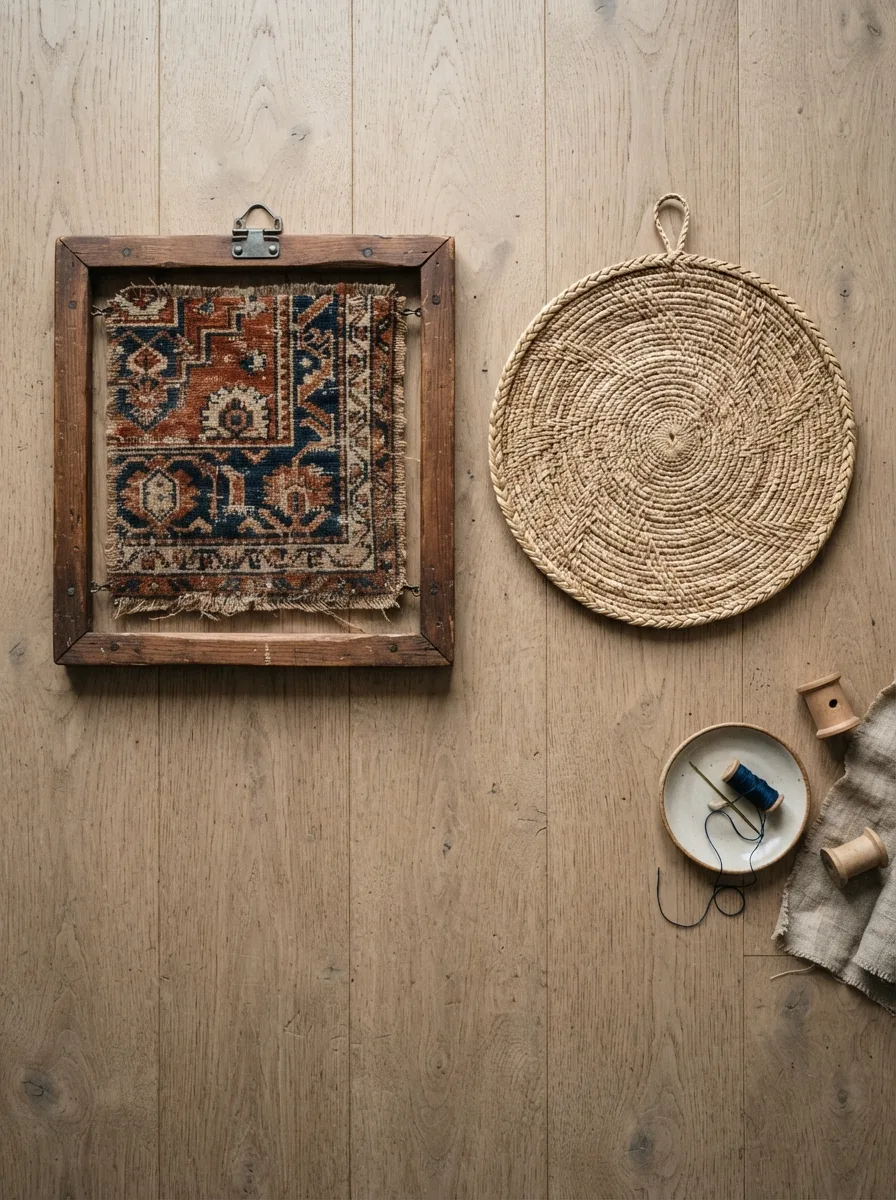
A framed textile scrap is a good stand-in for an earth-tone wallpaper swatch — hang it where you're considering a bigger pattern to see how the color reads in your actual light first.
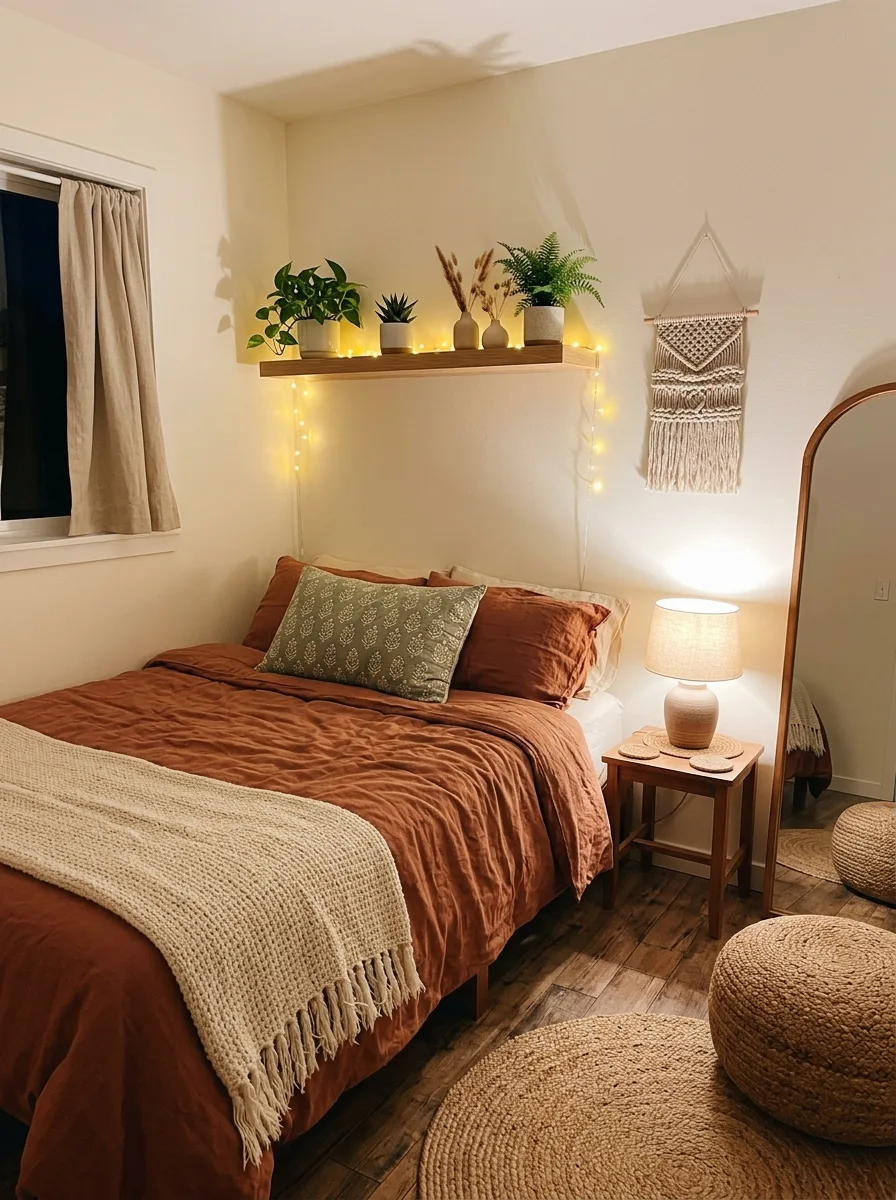
This matters more for a moodier, darker room specifically. A deep terracotta or charcoal-toned pattern holds its richness under low warm lighting the way a pale cream-and-sage print doesn’t — the paler pattern can start looking washed out and flat once the room dims in the evening, even if it looked great in daylight photos.
Peel-and-Stick: Good Enough for More Than a Rental
Modern peel-and-stick wallpaper has closed most of the gap with traditional pasted rolls — a good-quality one, smoothed carefully during application, looks nearly identical and holds up for years without lifting at the seams. It’s the obvious pick for renters who can’t commit to anything permanent, but it’s a legitimate option for homeowners too: it gives you the freedom to change the pattern again in a few years without stripping paste and drywall paper off the wall underneath.
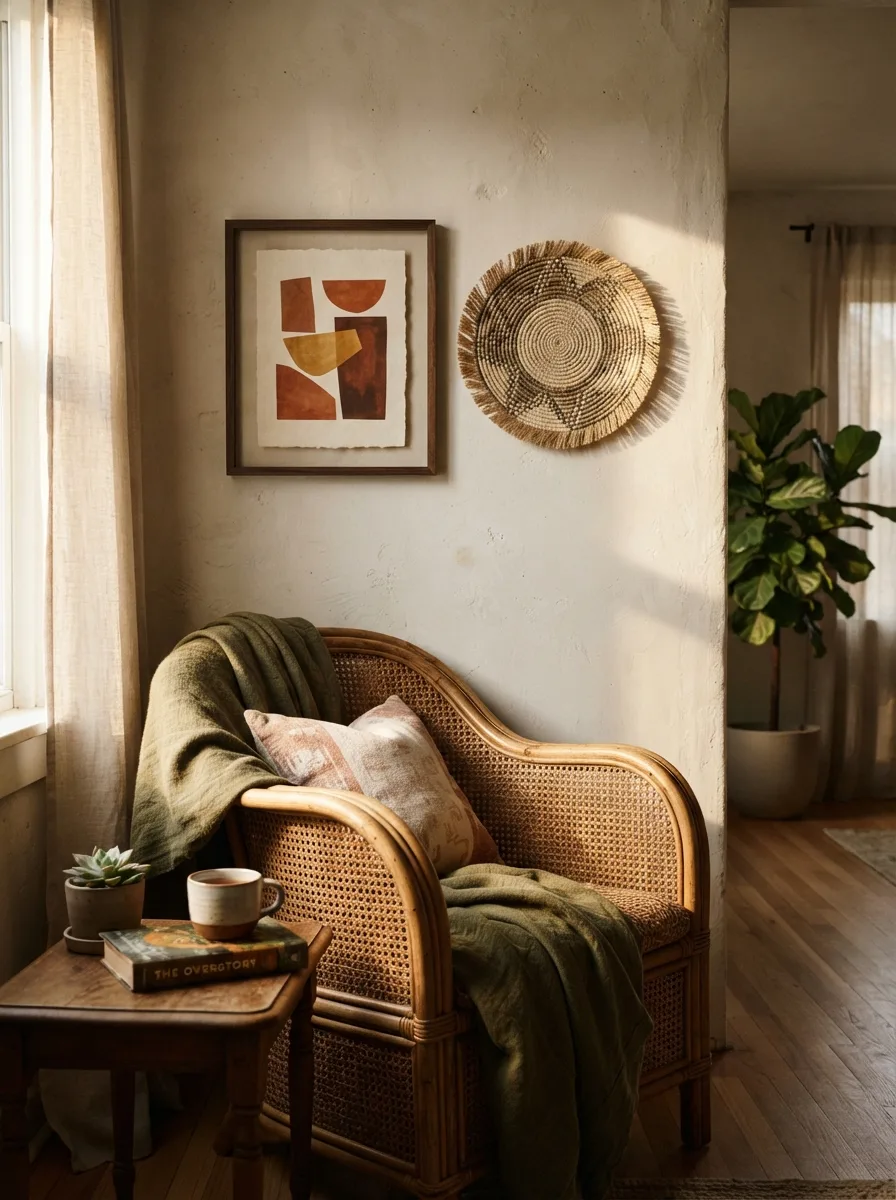
Textured plaster alone reads almost like a subtle wallpaper under changing light — worth considering before you assume you need a printed pattern at all.
If You’re Not Ready to Commit, Try the Texture-Only Version First
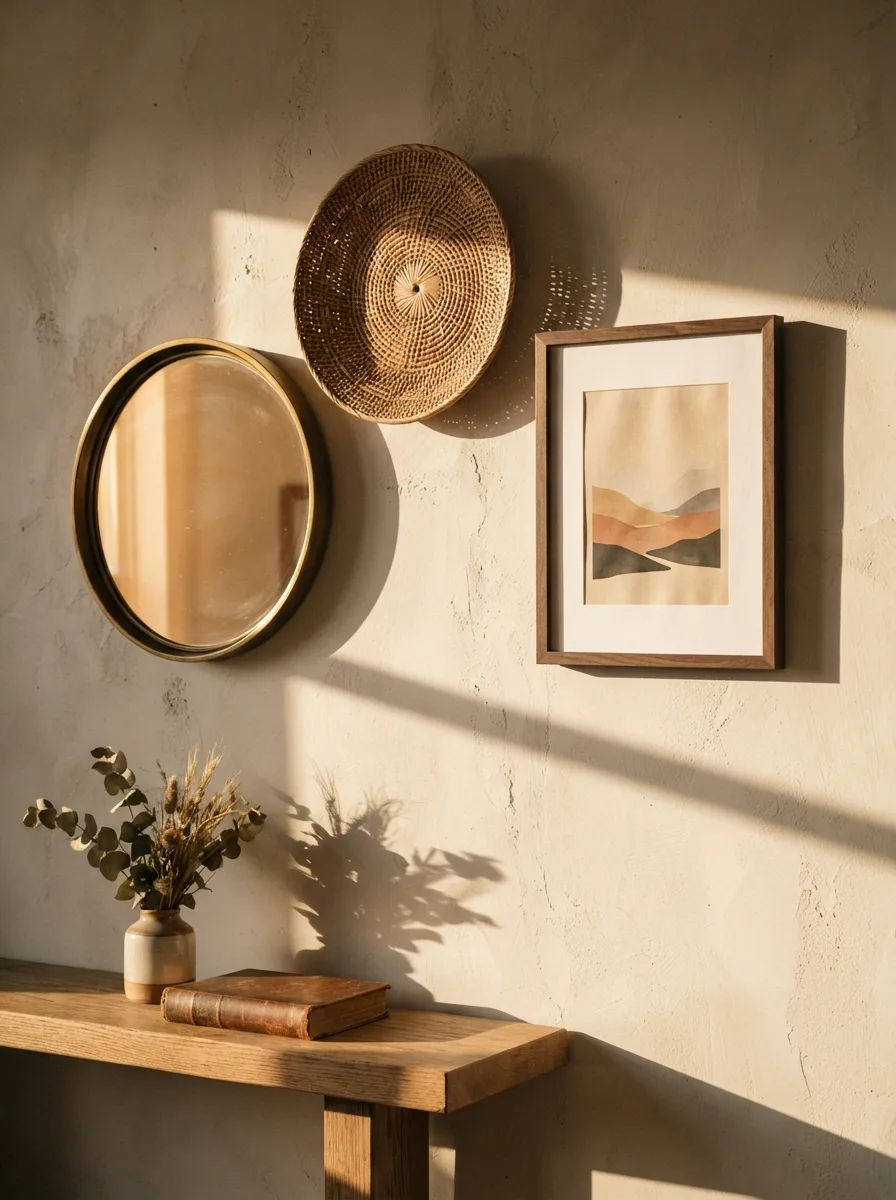
Before you order a roll, it’s worth testing whether the wall actually needs a printed pattern or just needs more texture. A concentrated wall cluster — several woven baskets or discs of varying sizes grouped tightly, with a mirror or single print at the center — covers roughly the same amount of visual wall space a patterned accent panel would, without any paste involved.
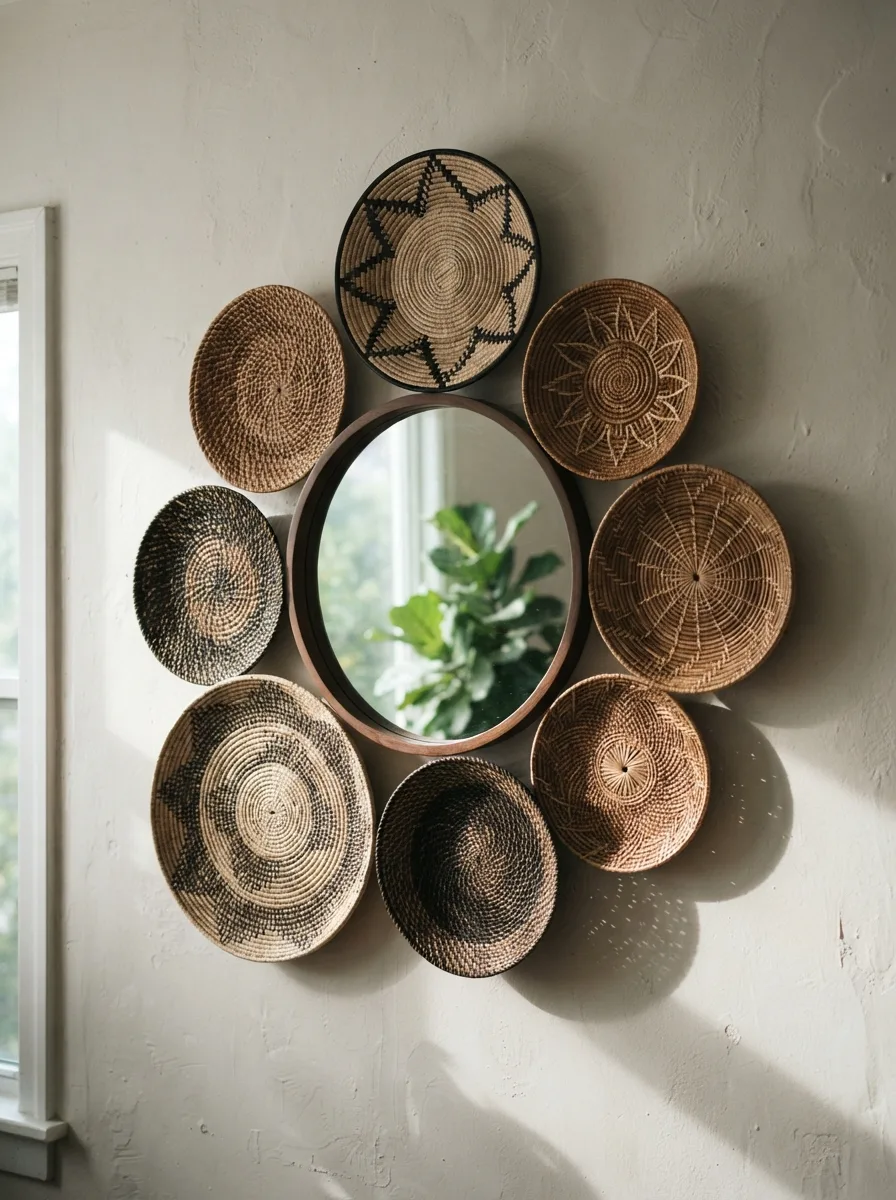
A concentrated cluster like this covers roughly the same wall area a patterned accent panel would — useful as a no-paste alternative if you're not ready to commit to wallpaper at all.
A single oversized textural piece does a similar job on its own. A large handwoven wall disc reads as a strong focal point the same way a patterned wallpaper panel would, and it comes down clean if you change your mind later.
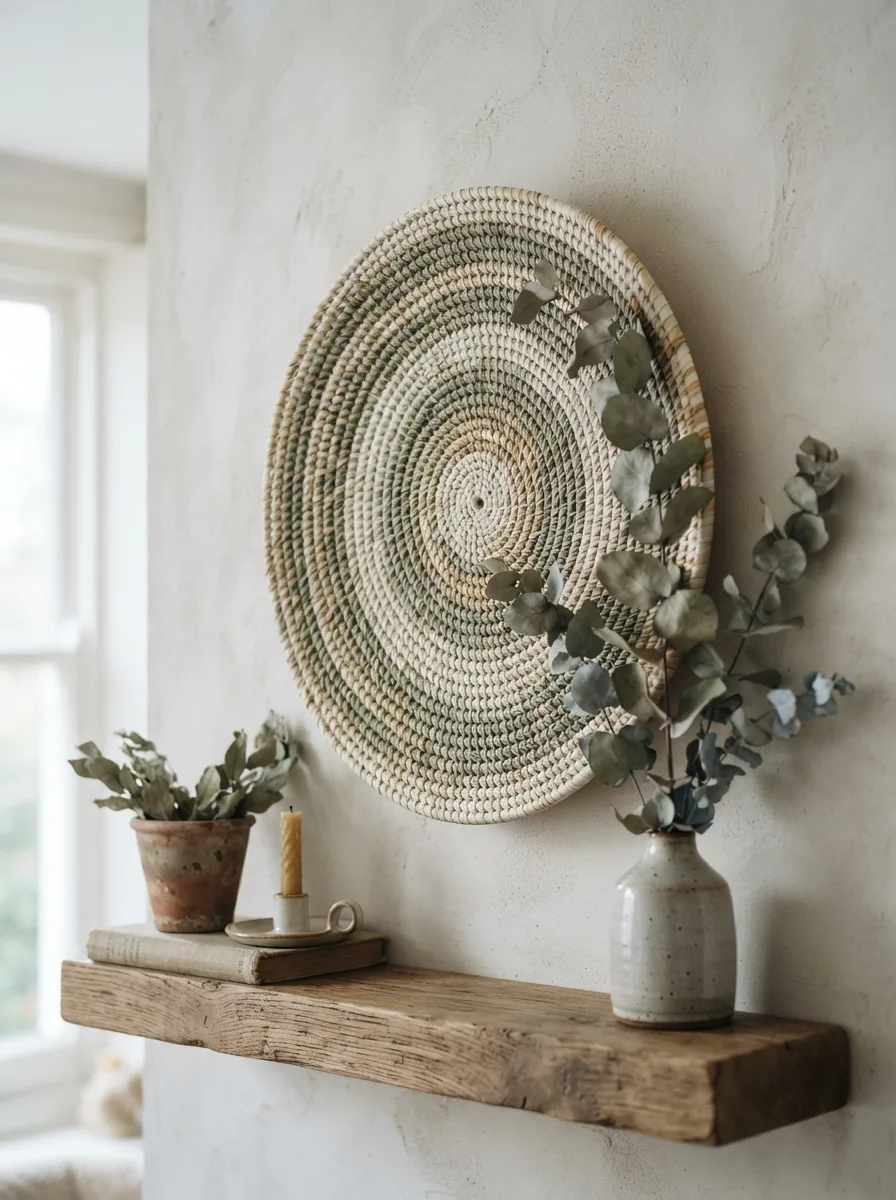
One oversized textural piece can cover as much visual ground as a patterned accent wall — worth weighing against wallpaper if you'd rather not deal with a pasted edge.
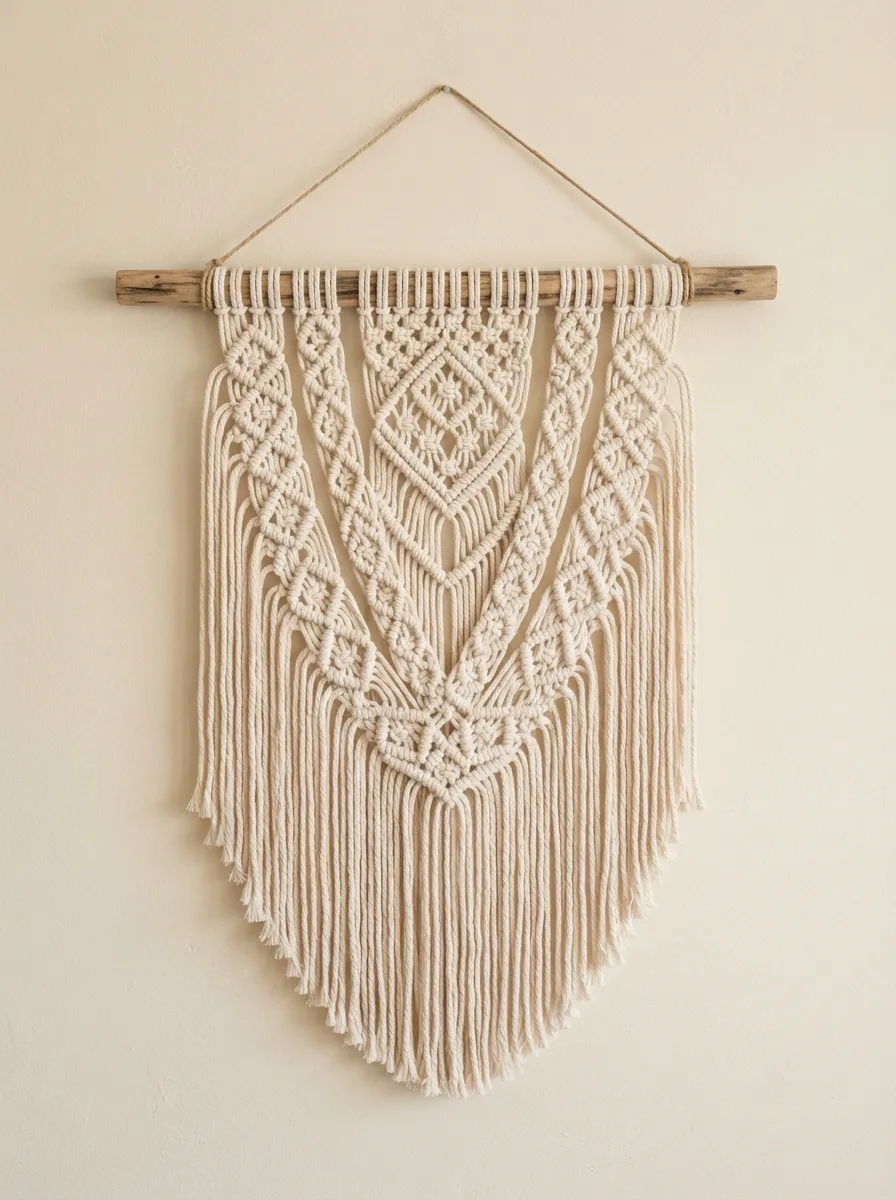
Macrame solves a related but slightly different problem than wallpaper does — it adds texture and dimension without adding color or pattern, where wallpaper adds color and pattern without much physical texture. Most rooms only actually need one of the two; figure out which your wall is missing before adding either.
Macrame and wallpaper solve the same problem from opposite directions — one adds texture without color, the other adds color and pattern without texture. Most rooms only need one.
Balance the Rest of the Room Around It
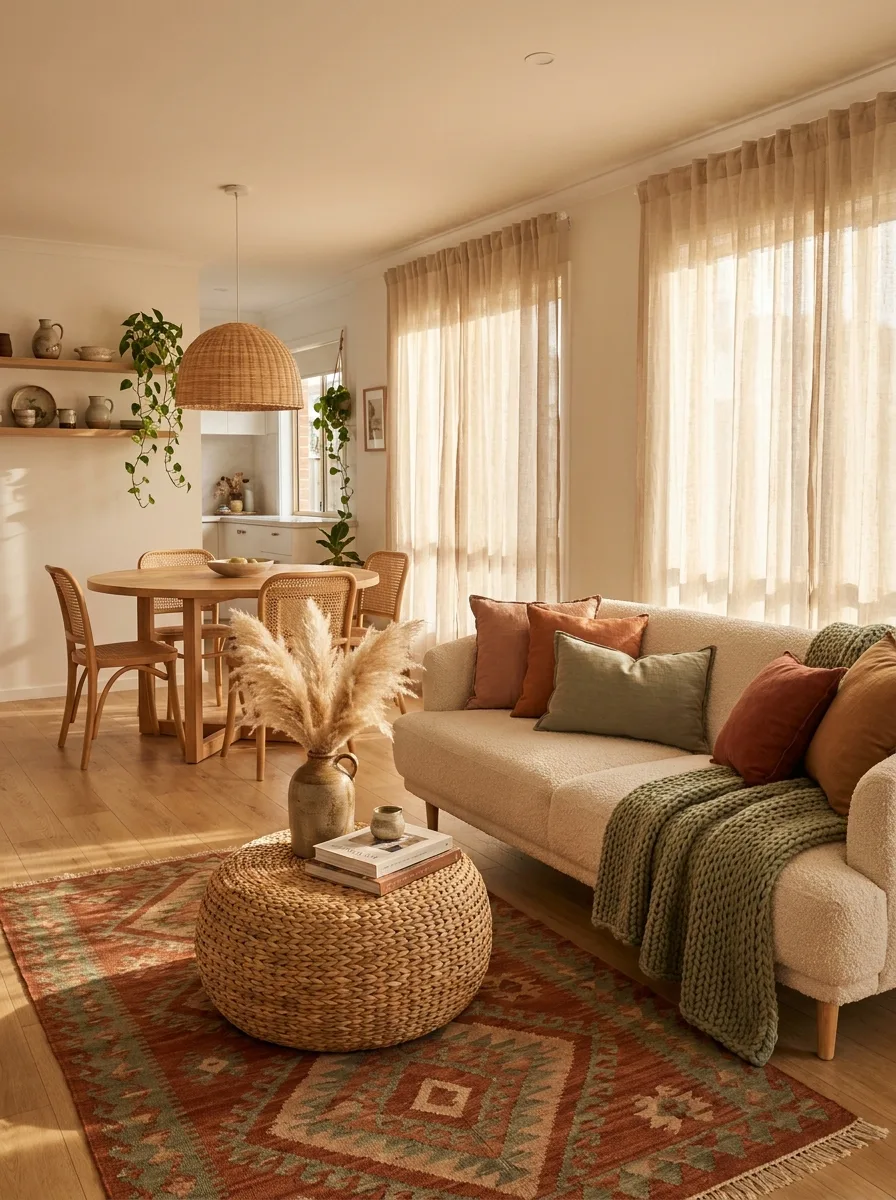
Once a wall carries a bold pattern, everything else nearby should intentionally calm down. If the furniture in front of the patterned wall already has pattern of its own — a printed cushion, a patterned throw — keep the wallpaper choice quieter and more tonal, or move the pattern to a different wall that’s less visually busy in front of it.
If the furniture in the room already carries pattern — like these cushions — let the wall behind it stay closer to solid, whether that's paint or a quieter wallpaper tone.
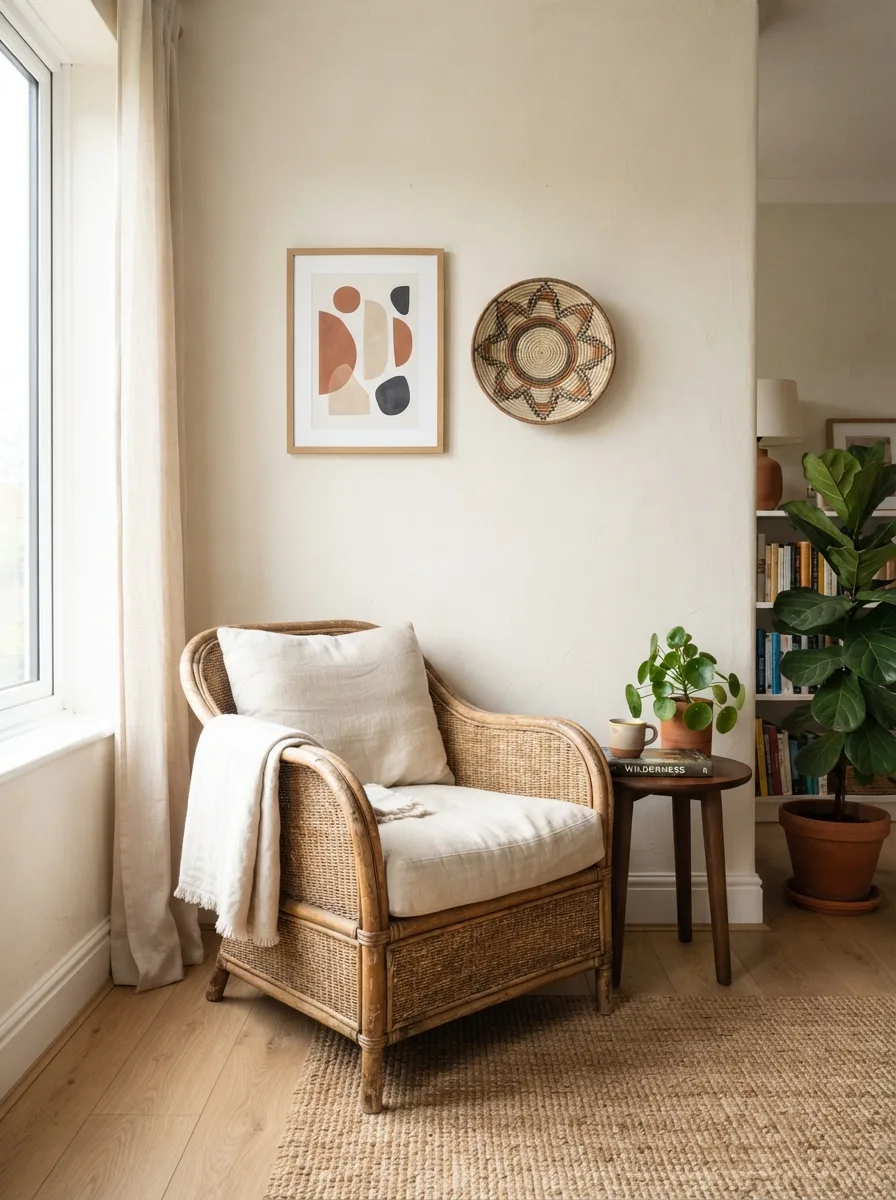
Two pieces, not ten — this is the ceiling for how much a single accent wall should carry if there's also a patterned wallpaper anywhere nearby.
A wall left plain elsewhere in the same room does real work too — it’s the visual breathing room that keeps the patterned wall reading as a feature rather than the room’s default state.
A plain, unpatterned wall like this is exactly the kind of backdrop a bolder botanical wallpaper needs somewhere else in the room to balance against.
Not Sure Yet? Live With a Plain Wall a Little Longer
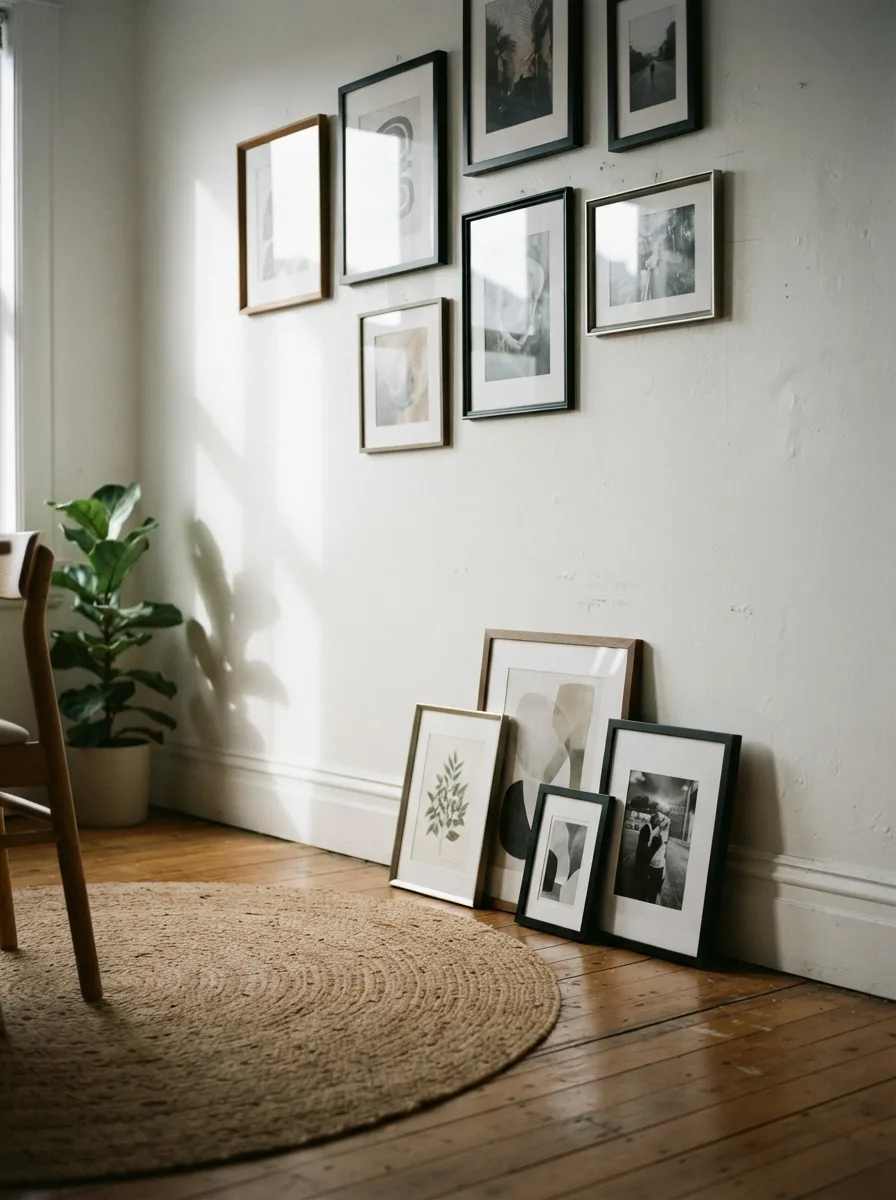
If you’re still deciding, there’s no rule that says the wall needs an answer this weekend. Leaning a few framed pieces against a bare wall — rather than committing to hung art or wallpaper — is a genuinely useful way to live with the space for a few weeks and see what it actually asks for.
Leaning frames against a bare wall is a good way to live with a plain wall for a while before deciding whether it actually wants wallpaper or just more art.
Frequently Asked Questions
How is this different from the site's general wall art guide?
That guide covers gallery walls, framed prints, macrame, and canvas art — objects you hang on the wall. This one is specifically about the wall surface itself: printed wallpaper patterns, where a full room versus a single accent wall makes sense, and renter-friendly peel-and-stick options. The two approaches often get combined in the same room, so it's worth reading both.
Should I wallpaper a whole room or just one accent wall?
For a bold botanical or earth-tone print, one accent wall is almost always the better call — usually the wall behind a headboard, a dining table, or a fireplace. A busier pattern across all four walls of a lived-in room tends to compete with furniture and art rather than support it. Save full-room application for a smaller space like a powder room or entryway, where there's less competing visual noise to begin with.
What patterns actually read as 'boho' wallpaper?
Large-scale botanical prints (monstera, fern, palm leaf), earth-tone abstract shapes in terracotta and rust, and block-print-style patterns inspired by mudcloth or ikat textiles are the three that read boho rather than just 'busy.' Avoid anything too geometric or metallic-finished — that tends to skew mid-century or art deco instead.
Is peel-and-stick wallpaper actually good enough for a real room, or just a temporary fix?
Modern peel-and-stick has improved enough that a good-quality roll, properly smoothed during application, can look nearly identical to pasted wallpaper and last several years without peeling at the seams. It's the obvious choice for renters, but it's also a reasonable permanent option for homeowners who want to be able to change a pattern again in a few years without stripping paste off drywall.
What wall works best for a boho wallpaper accent if I don't have an obvious headboard or fireplace wall?
The wall a dining table backs onto is a strong second choice — it's seen mostly while seated, at a shorter viewing distance, which is exactly where a bolder pattern reads as a considered feature rather than overwhelming a room you're moving through. Our dining room guide covers that specific wall placement in more detail.
Does a patterned wallpaper work in a darker, moodier room, or does it need bright light?
It works in both, but the pattern choice should shift — a deep terracotta or charcoal-toned botanical print holds up in low, warm lighting the way a pale cream-and-sage print wouldn't, which can start looking washed out once the room goes dim in the evening. If you're building toward a darker overall palette, choose the wallpaper first and light the room around it rather than the other way around.